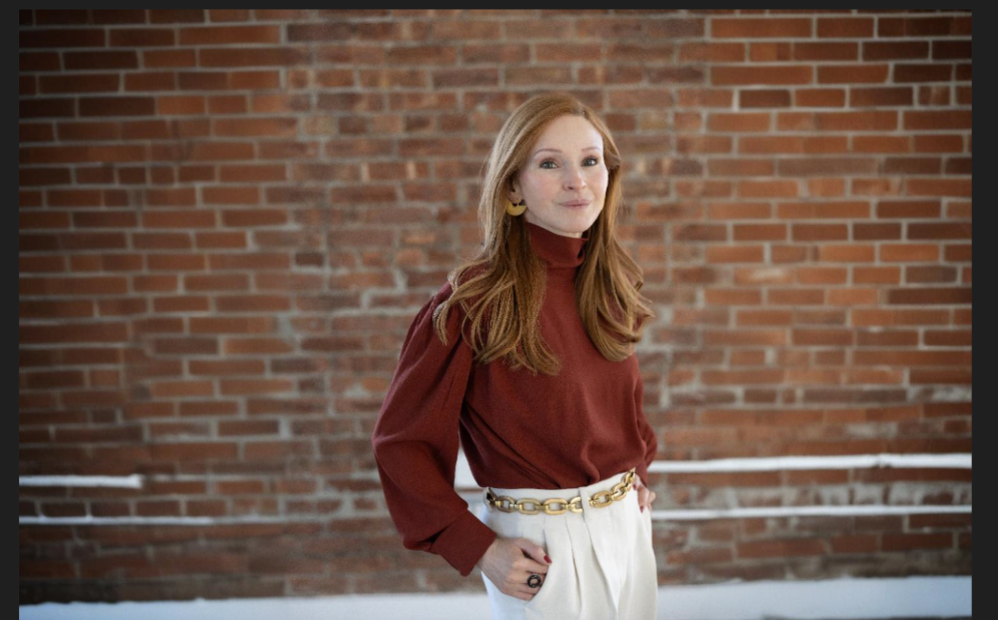
“My background in psychology has informed all aspects of creating Blue Panda and I believe that is what has made it a successful business,” says Paula Madrid, founder and director of Blue Panda Office Spaces. “My understanding about human behavior, how people express their needs, and perhaps even what colors might be soothing.”
This unique perspective—combining clinical psychology expertise with real estate intuition—has enabled Madrid to thrive in a market segment many investors abandoned during the pandemic: office space. While headlines declared the decline of offices and developers scrambled to convert commercial buildings to residential units, Madrid was quietly building a business that’s now expanding throughout Brooklyn’s Williamsburg and Greenpoint neighborhoods.
Swimming Against the Current
When Madrid opened her first location at the William Vale hotel in December 2021, conventional wisdom suggested she was making a grave mistake. Office vacancy rates were soaring, remote work seemed permanently entrenched, and industry experts predicted a commercial real estate collapse.
“Life needed to return to normal at some point,” Madrid explains, reflecting on her contrarian decision. “I just felt that if I create a space that is sort of unique enough—it doesn’t mean that it’s the best, it just means it’s unique enough—people will come, people will feel comfortable, and people will feel like, this is what I need.”
Her instincts proved remarkably prescient. Within two months of opening, Madrid was already scouting her next location. The demand has been so consistent that she reports securing pre-reservations for half of each new space before even completing the buildout.
The Psychologist’s Advantage: Understanding a Niche Market
What sets Blue Panda apart isn’t just Madrid’s contrarian timing—it’s her laser focus on an underserved market segment she intimately understands: mental health professionals.
“My main customer is the mental health and wellness client,” Madrid reveals. “90% of my clients are these amazing professionals.”
As a doctor of psychology with over two decades of experience, Madrid doesn’t just rent space to these professionals—she speaks their language and understands their unique needs. “I can refer clients to them,” she notes. “I will often have coffee with a tenant and talk to them about I established my clinical practice or some thoughts about how to make theirs more successful.”
This specialized focus has enabled Madrid to optimize her spaces for a clientele whose requirements differ significantly from traditional office tenants. “The specific client I have, or at least the majority of my clients, don’t need 2,000 square feet. They need 150 to 200 square feet,” she explains. “That works well for them.”
Flexible Model, Multiple Revenue Streams
Blue Panda’s business model diverges sharply from both traditional office rentals and trendy coworking spaces. “Everyone has a private office,” Madrid emphasizes. “There’s no one working in a common area. The focus really is a serene space where there is community and there’s some activity, but it’s really a place where it’s quiet, it’s serene, there’s no hardcore, active networking.”
This tranquil environment perfectly suits therapists, psychologists, and counselors who need privacy and calm for client sessions. But Madrid’s real innovation lies in the flexible leasing structure that maximizes both space utilization and revenue.
“For a lot of my clients, they really need a part-time office, and what that means is they just need to be at the office Mondays and Thursdays,” Madrid explains. With this approach, she can rent the same physical office to multiple practitioners who use it on different days of the week.
Any remaining availability becomes an additional revenue stream: hourly rentals. “What doesn’t rent on a part-time or full-time basis becomes an hourly rental,” says Madrid. This option has attracted surprising clientele, including television production crews. “Literally every week in February we had one calling and saying, ‘I need an office for five hours.'”
The model creates value for both Madrid and her tenants. While the revenue per square foot exceeds traditional office leasing metrics, clients appreciate the all-inclusive nature of the arrangement. “There’s no overhead cost, there’s no cleaning, Wi-Fi, there’s no need to pay for your own coffee,” Madrid explains. Her tenants receive turnkey convenience, prime locations, and thoughtfully designed environments perfectly suited to their professional needs—all without the long-term commitments and large space requirements of conventional leases.
From Constraint to Opportunity: The Wellness Office Innovation
Perhaps the most revealing example of Madrid’s innovative approach came when faced with a common real estate challenge: windowless spaces that typically command lower rents and sit vacant longer.
Where others saw a liability, Madrid identified an opportunity. “I said, who doesn’t need a window?” she recalls. “I was like, ‘Oh my God, masseuses don’t need windows!'”
This insight led to the development of specialized “wellness offices”—spaces equipped with massage tables and designed specifically for bodywork practitioners, acupuncturists, and aestheticians. After some experimentation, these wellness offices have become a significant growth area.
“I really think that there’s a significant opportunity there, and I’m really capitalizing on that,” Madrid says. “Not all massage therapists want to work at a spa. They have a license. They can have their own practice, acupuncturists have their own practice and the same is true for aestheticians.”
Creating Community Through Thoughtful Design
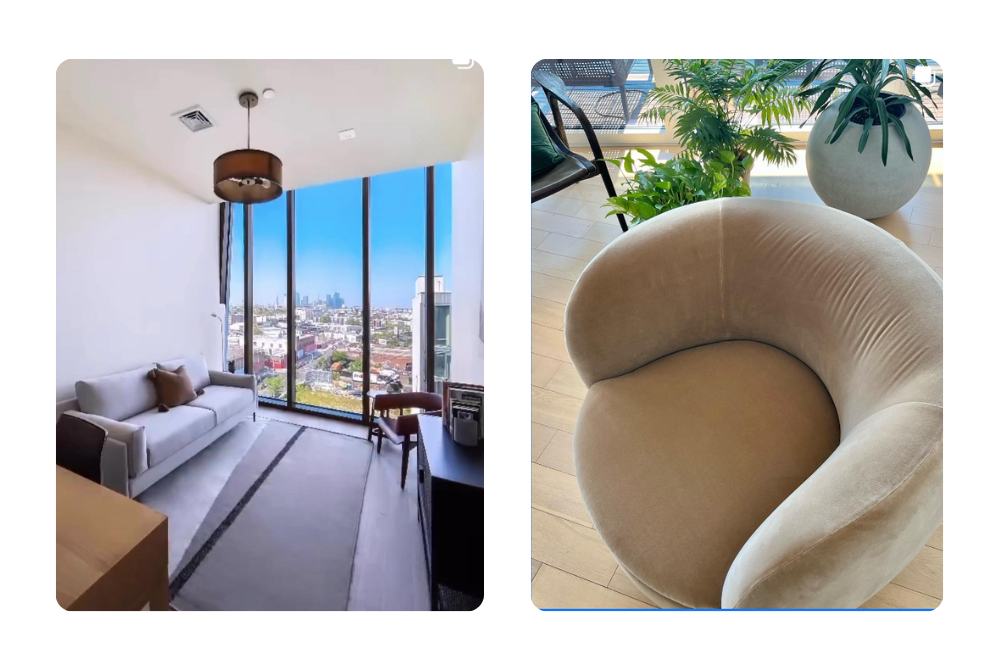
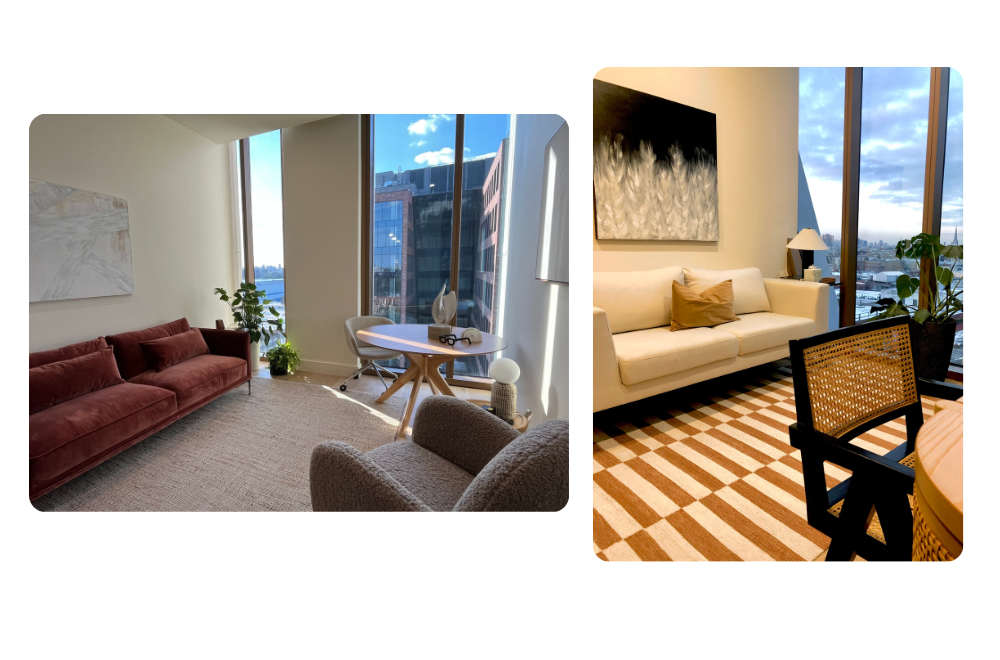
Madrid’s background informs every aspect of her spaces, from layout to lighting. “I literally buy everything. I have an expert upholsterer who custom makes my benches, I select the wallpaper carefully, and I buy every item including plants, light fixtures,” she says.
Through experience, she’s learned that even mental health professionals—often stereotyped as solitary practitioners—seek community in their workspaces. “I did not create big enough pantry areas where my tenants can mingle,” she admits of her earlier locations. “I come from the psychology model where you go and you see your patient, you go home. But this is not what’s happening here. Blue Panda has become a bit more of a community.”
This insight has shaped plans for upcoming locations: “In the new space that I’m starting to build out very soon, there’s going to be a conference room. There’s a very large kitchen with three windows. I’m going to do an herb garden of sorts. There’s going to be a kombucha tap.”
Location remains paramount. “Our spaces coming up are located within the same building as a Michelin star restaurant,” Madrid notes excitedly. “How much more exciting can this get?”
Growth on Her Terms
Despite Blue Panda’s success, Madrid has deliberately chosen to bootstrap rather than seek outside funding. “I don’t have investors and I never wanted them,” she states matter-of-factly, acknowledging that while this might slow expansion, it allows her to maintain control.
The company continues to grow within its Brooklyn focus areas, with two new floors opening soon on Broadway and Bedford. Madrid is also exploring potential locations in Manhattan’s Upper West Side, additional spaces in Williamsburg, and has fielded requests for New Jersey locations.
“I’ve had requests for New Jersey, and I looked at spaces in Hackensack, New Jersey, just because I think it would be amazing,” she says. “I’m bootstrapping because I don’t have investors and I wouldn’t have it any other way.”
A Future Path for Office Spaces
As Class B and C office buildings in prime locations struggle with traditional tenancy, Madrid’s approach offers a compelling alternative. By subdividing larger spaces into smaller, specialized offices with flexible leasing options, property owners might discover improved occupancy and returns.
For Madrid, this opportunity emerged naturally from her dual expertise. “I’ve always been obsessed, and the word is actually obsessed, with real estate,” she confesses. “I mean, I can spend time looking at just floor plans, quite literally, and also interior design.”
That passion, combined with her deep knowledge of psychology, has created a business that succeeds precisely where many predicted failure—suggesting that understanding the psychological needs of specific tenant segments may be as crucial as location, amenities, or price.
This article was sourced from a live expert interview.
Every month we conduct hundreds of interviews with active market practitioners - thousands to date.
Plainfield, Illinois, about 40 minutes southwest of Chicago, spent the last two decades building itself into a family-oriented suburb with good schools, highway access, and prices well below neighboring Naperville. That growth phase worked. Families moved in, raised children, and put down roots. Now many of those original homeowners are entering retirement, and their homes ...
In a city with enough inventory to give buyers real leverage, the segment of the Houston housing market that should be busiest, homes priced between $300,000 and $600,000, is among the slowest to move. Properties below $300,000 are attracting first-time and value-oriented buyers, and listings above $500,000 continue to draw move-up purchasers with less rate ...
Most small mountain towns in the American West have a straightforward real estate story: pandemic-era demand inflated prices, and now those prices are correcting. Taos County, New Mexico, is not following that pattern. Per-square-foot prices there are still climbing, according to Karen Todd, a real estate professional with The Dragonfly Group at Berkshire Hathaway HomeServices ...
A declining median price usually signals a cooling market. In Northeast Dallas, the story is more complicated. The number of homes selling in 2026 has actually increased compared to 2024 and 2025, according to Cindy Dunnican of The Dunnican Team at Coldwell Banker Apex, who has worked the Northeast Dallas market since 1998. But the ...
Large builders in Delaware call their homes “affordable” when prices start at $300,000 to $350,000. For workers earning 40 to 80 percent of the area median income, roughly $35,000 to $60,000 a year in Delaware, those numbers don’t work, even with down payment assistance attached. The gap between what programs label affordable and what service-industry ...
Homeowners who bought during the 2022–2023 building boom in parts of southern Dallas-Fort Worth are discovering an uncomfortable reality: the new homes going up next door are priced at or below what they paid. For sellers who need to exit, the math often doesn’t work. Some are coming to the table with cash beyond their ...