“The museum in the 21st century has to be more than just a place where nothing ever changes,” says Charles Clark, Executive Director of Castle in the Clouds, a historic estate in New Hampshire’s Ossipee Mountains. “Museums today are about being places where people come together.”
This philosophy is shaping how historic properties connect with their communities while creating sustainable business models in today’s hospitality landscape. With its recent National Historic Landmark designation, Castle in the Clouds exemplifies a compelling blend of historic preservation and community-centered innovation.
From Shoe Magnate’s Dream to Historic Landmark
The story of Castle in the Clouds begins with Thomas Plant, a self-made man whose education ended in eighth grade before he joined New England’s shoemaking industry. Working his way up from an entry-level position, Plant eventually owned his own shoemaking company, retiring in 1910 as a wealthy man. After marrying his second wife Olive, he began acquiring land in the Ossipee Mountains to create their retirement estate.
Plant amassed approximately 6,300 acres, including two miles of shorefront on Lake Winnipesaukee—a staggering amount of lakefront property especially by today’s standards. Between 1913 and 1914, the Plants built their retreat where they could enjoy everything they loved: 30 miles of carriage and bridle trails, an on-site golf course, tennis courts, and a magnificent house that would later become known as “Castle in the Clouds.”
The estate’s story took a tragic turn in the mid-1920s when bad investments forced the Plants to consider selling the property. Though they found no buyer, a friendly banker helped them remain on the estate with minimal costs until Thomas Plant’s death in 1941. The bank subsequently foreclosed, allowing Olive to take only personal effects before moving away. The property was auctioned to the Tobey family from Plymouth, New Hampshire, who used it as a summer home for about 15 years.
In 1956, Richard Robie purchased the property and conceived the idea of opening it as a tourist attraction. In 1959, he named it “Castle in the Clouds” and operated it as a for-profit venture until the early 1990s—though as Charles notes, it wasn’t particularly profitable during this period. After changing hands again, the property was sold in 2002 to the Lakes Region Conservation Trust, which raised $5.9 million from approximately 2,000 donors to purchase and conserve the land.
While the Conservation Trust focused on the undeveloped acreage, they established the Castle Preservation Society in 2006 to manage the historic buildings. Clark has served as the organization’s executive director for nearly 11 years, guiding its development into a multifaceted destination.
Diversified Revenue: A Model for Historic Properties
Castle in the Clouds offers a compelling case study in sustainable business modeling for historic properties.
Rather than relying solely on admission fees and donations, the property has developed multiple revenue streams that fund both operations and preservation efforts. “That’s one of the things that really sets us apart as a historic house museum,” Charles explains. “We have many opportunities for earned revenue, which means that when we fundraise, we can focus primarily on the mission, not operations.”
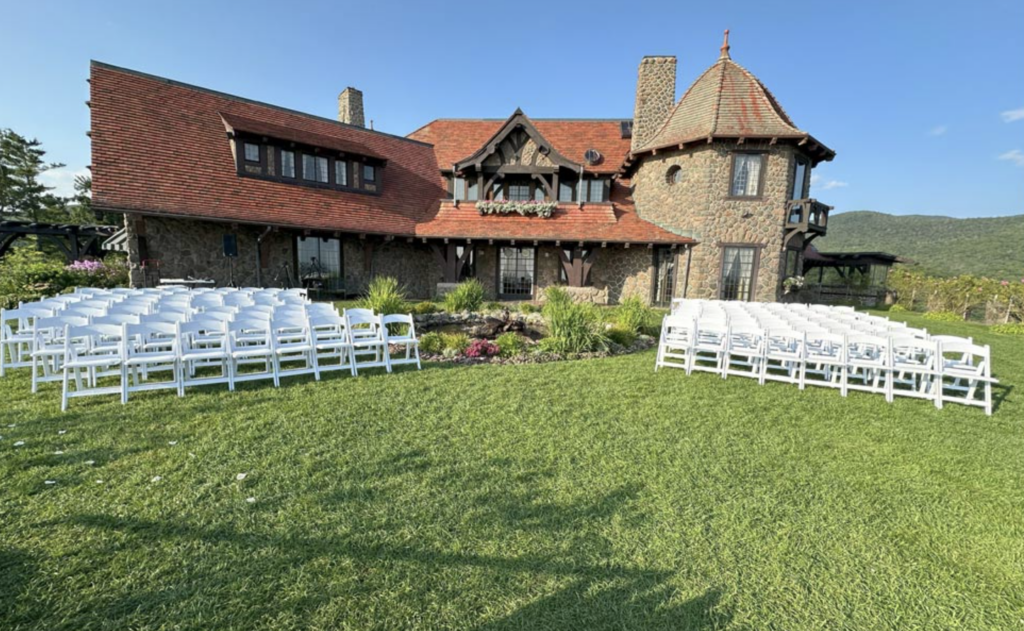
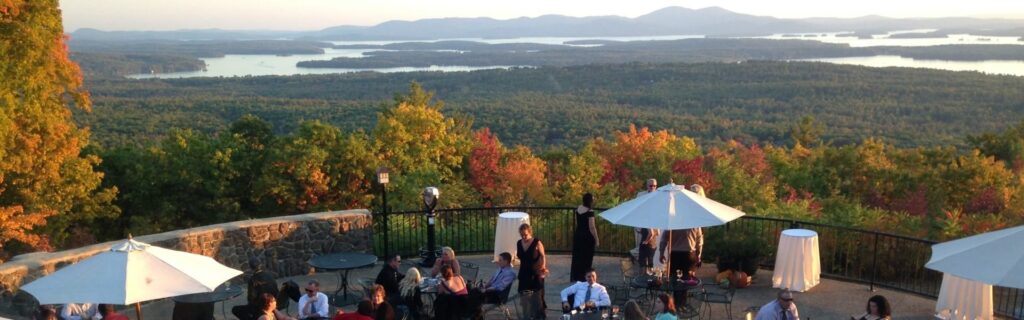
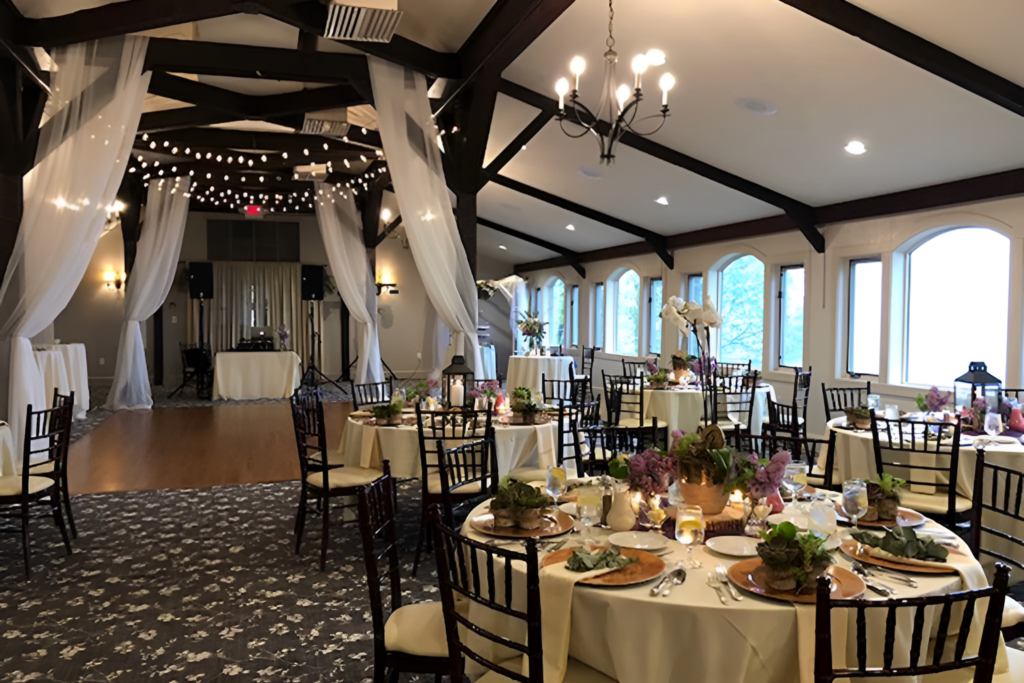
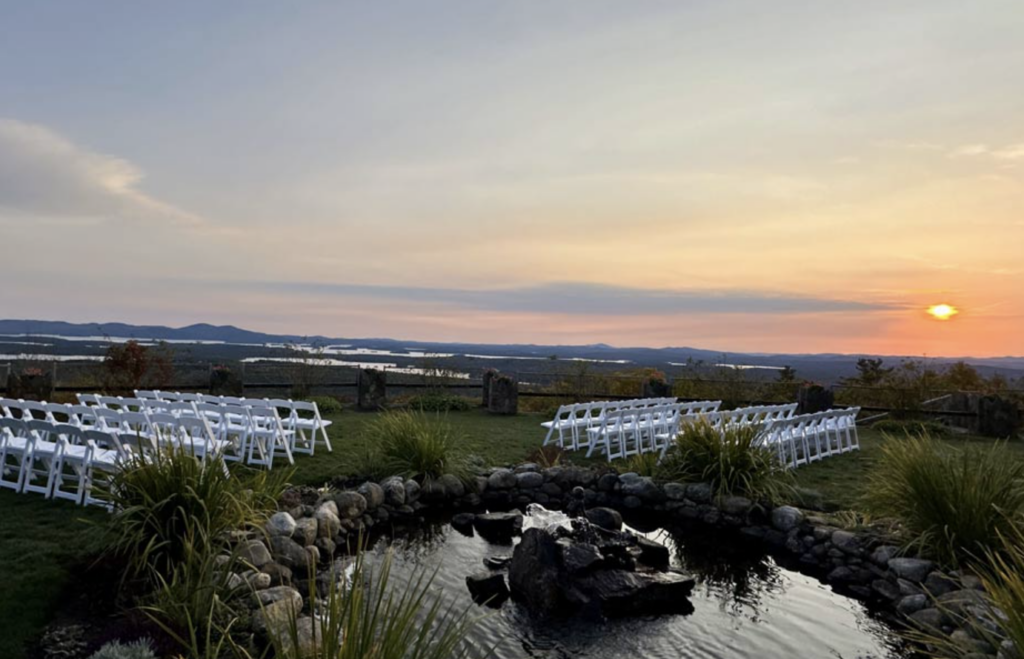
The property features an on-site restaurant with outdoor seating overlooking the lake, hosts between 40 and 50 weddings annually on the Castle grounds, and collects museum admission fees. These and some additional revenue streams cover operational costs, allowing fundraising efforts to focus on educational programming and restoration of the historic buildings.
For Charles, this diversified approach creates an engaging leadership role that spans both preservation and business development. “It makes my job so fun,” he notes, “because I get to manage the historic museum aspects, which I really love, but also actively support and run the business side of things, with the weddings, rentals, and restaurant.”
Museums as Community Spaces
Castle in the Clouds has reimagined the relationship between historic properties and their communities—a trend Charles has observed accelerating over the past decade.
The traditional museum model—unchanging exhibits where institutions position themselves as the sole experts—is no longer viable. “The institutions that want to just be collecting entities are struggling,” Charles observes. “Attendance is down, donations are down, revenue is down, and it’s not a sustainable model.”
By contrast, institutions that have embraced becoming community hubs “have seen increasing engagement, increasing donations, increasing earned revenue. It’s the way to move our industry forward.”
This approach extends to partnerships that expand the property’s appeal beyond tourists. Charles’s team collaborates with the local library to host preschool story hours by the Castle pond. “Parents with young children come up and sit next to our beautiful pond. A librarian brings a selection of books. They do reading, some craft time, and then many stay and perhaps take a castle tour, or enjoy an ice cream at the cafe.”
Other community-focused events include a major car show that utilizes the property’s open fields and the regional concentration of antique car collectors. The show typically features 250-260 classic cars ranging from 1914 models to newly released Corvettes, creating an event with broad appeal that draws locals and visitors alike.
Strategic Partnership Development
The property has intensified its approach to partnerships in recent years. “One of our key focuses has been growing relationships with other nonprofits,” Charles says. Beyond their foundational relationship with the Lakes Region Conservation Trust, they’ve developed a partnership with Great Waters, which hosts several concerts annually in a large tent on the castle grounds.
“It’s an excellent way to bring the community here to enjoy the arts and beauty of the property,” Charles explains. “We provide food and beverage services, generating revenue, while they gain a beautiful central location that attracts people from around the lake—you can’t beat the setting.”
When evaluating potential partnerships and programming, Castle in the Clouds relies on organizational values developed through strategic planning. Beyond these guidelines, Charles emphasizes the importance of community input: “We’ve been making a concerted effort recently to listen to what the community says they want and need.”
Balancing Tourism and Local Engagement
For many hospitality and real estate operators, striking the right balance between tourist attraction and local resource presents both a challenge and opportunity.
Castle in the Clouds exists in what Charles describes as “an interesting dichotomous world.” With a 60-plus-year history as a tourist attraction, drawing visitors comes naturally. “If visitors ask anyone in the area, they’re going to recommend the Castle as one of the must-see attractions.”
However, Charles is equally focused on engaging local residents. “We don’t want our local community—the year-round residents who are our neighbors—to feel the Castle has nothing for them because it’s just for tourists.”
This commitment to local engagement manifested in the development of school programming that ties directly to New Hampshire educational standards. By forming a teacher advisory group, the Castle staff revamped field trips to incorporate lessons across various subjects using the property as a backdrop. For instance, high school poetry classes can draw inspiration where Robert Frost once wrote, while sixth-grade math students explore architectural principles through the Castle’s stonework.
The focus on community engagement directly correlates to revenue generation. “There’s a one-to-one correlation,” Charles affirms. “The more engaged an organization or business is with the community, the more revenue you’ll generate.”
While tourism fluctuates seasonally, engaging local residents creates a more stable audience. When Charles arrived, he frequently heard locals say, “They’re up on the hill. It’s just for the tourists. It’s not for us.” Changing that perception has been a priority of his tenure.
One effective strategy has been hiring local high school students. “They get a job here, and if we provide good management, they’ll return for multiple years before college and bring their families and friends because they want to showcase their workplace.”
Looking Forward: Strategic Expansion
With its recent National Historic Landmark designation and increasing community engagement, Castle in the Clouds is planning for continued growth. One idea that Charles is excited to pursue is the eventual construction of a visitor center that would serve both Castle in the Clouds visitors and those exploring the Conservation Trust trails.
The ideal facility would provide year-round, climate-controlled food service and restrooms—currently limited during winter months—while creating additional rental spaces and revenue opportunities. Though still in the early stages, this kind of project represents the next evolution in the property’s development as a vital community and cultural resource.
This article was sourced from a live expert interview.
Every month we conduct hundreds of interviews with active market practitioners - thousands to date.
Plainfield, Illinois, about 40 minutes southwest of Chicago, spent the last two decades building itself into a family-oriented suburb with good schools, highway access, and prices well below neighboring Naperville. That growth phase worked. Families moved in, raised children, and put down roots. Now many of those original homeowners are entering retirement, and their homes ...
In a city with enough inventory to give buyers real leverage, the segment of the Houston housing market that should be busiest, homes priced between $300,000 and $600,000, is among the slowest to move. Properties below $300,000 are attracting first-time and value-oriented buyers, and listings above $500,000 continue to draw move-up purchasers with less rate ...
Most small mountain towns in the American West have a straightforward real estate story: pandemic-era demand inflated prices, and now those prices are correcting. Taos County, New Mexico, is not following that pattern. Per-square-foot prices there are still climbing, according to Karen Todd, a real estate professional with The Dragonfly Group at Berkshire Hathaway HomeServices ...
A declining median price usually signals a cooling market. In Northeast Dallas, the story is more complicated. The number of homes selling in 2026 has actually increased compared to 2024 and 2025, according to Cindy Dunnican of The Dunnican Team at Coldwell Banker Apex, who has worked the Northeast Dallas market since 1998. But the ...
Large builders in Delaware call their homes “affordable” when prices start at $300,000 to $350,000. For workers earning 40 to 80 percent of the area median income, roughly $35,000 to $60,000 a year in Delaware, those numbers don’t work, even with down payment assistance attached. The gap between what programs label affordable and what service-industry ...
Homeowners who bought during the 2022–2023 building boom in parts of southern Dallas-Fort Worth are discovering an uncomfortable reality: the new homes going up next door are priced at or below what they paid. For sellers who need to exit, the math often doesn’t work. Some are coming to the table with cash beyond their ...