“We have an optimistic view of the future,” says Rob Huthnance, newly appointed President of CT Realty, a company at the forefront of industrial real estate development across the United States. With over 11 years at the company and a background as a longtime Prologis executive, Huthnance is guiding CT Realty through what promises to be an aggressive expansion phase following a period of relative quiet in the industrial sector.
The E-Commerce Revolution Driving Industrial Growth
The explosive growth of e-commerce has fundamentally transformed the industrial real estate landscape. “Fifteen years ago, the percentage of U.S. sales transacted electronically was about 5%. Today, that number is north of 25%, probably growing to 40%,” notes Huthnance.
This shift in consumer behavior has created unprecedented demand for logistics infrastructure. “Retail sales that take place online increase the requirement for new warehouse space as products are sent directly to the consumer without going through a brick-and-mortar store.” Huthnance explains. “So there’s been a surge of demand for what we build.”
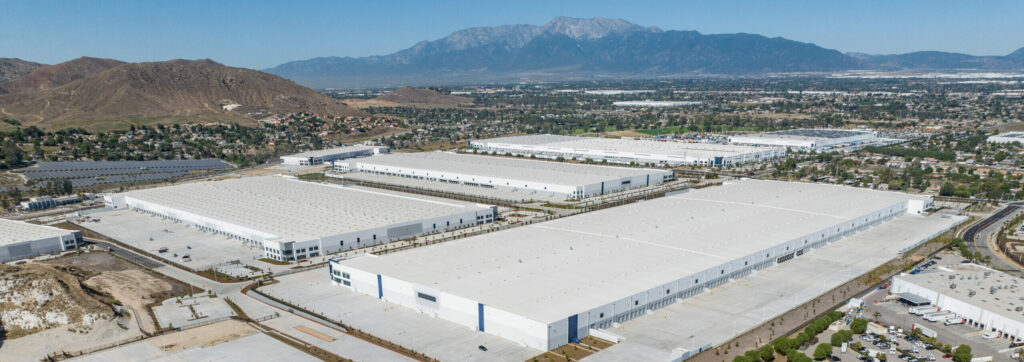
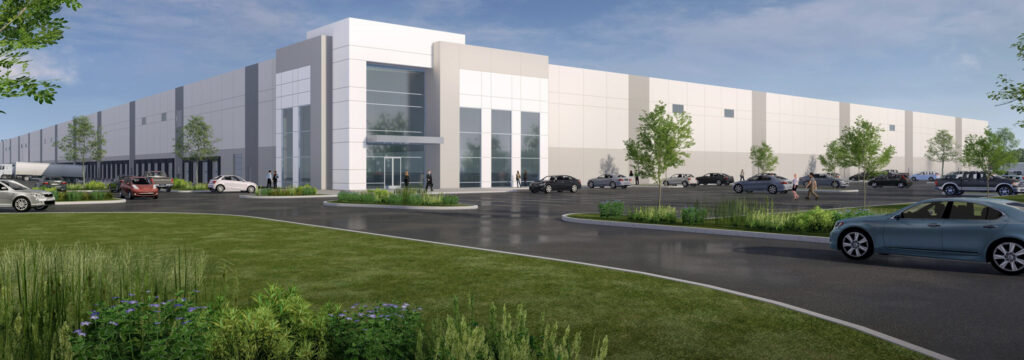
CT Realty has strategically positioned itself at the larger end of the industrial development spectrum, with most of their buildings ranging between 500,000 and one million square feet. This focus has attracted major tenants including large retailers and third-party logistics providers (3PLs) who require substantial space for their operations.
A Legacy of Growth and Adaptation
CT Realty celebrated its 30th anniversary last year, marking three decades of evolution and strategic focus. For the past 15 years, the company has concentrated exclusively on the industrial sector, with the last decade primarily dedicated to ground-up development of large-scale logistics facilities.
“Our first development outside of Southern California was a large 550-acre transaction here in Dallas that subsequently was built out to 9 million square feet of warehouse space,” Huthnance explains. From there, CT Realty expanded its footprint nationally, establishing operations in key logistics markets including Atlanta, Indianapolis, Columbus, New Jersey, Jacksonville, Chicago, and throughout Florida.
This expansion has been substantial by any measure. To date, CT Realty has developed over $8 billion in total development value across 35 million square feet of industrial space, with significantly more in the pipeline ready for development.
The ANDURIL Industries Deal: A Landmark Transaction
One of CT Realty’s most significant recent achievements is their partnership with ANDURIL Industries, a defense technology manufacturer. The deal, announced in late March, involves the development of a 5.2 million square foot manufacturing campus in Ohio.
“That was a very sophisticated user who went across the country, looking for the ideal development site for what will be a several billion dollar facility,” Huthnance explains. ANDURIL Industries had specific requirements: approximately 500 acres of development-ready land, proximity to a significant airfield, and a pro-development state willing to support a major new employer.
The scale of this project is remarkable. The 4,000 jobs created and new campus efforts are considered the largest single job creation event in the history of Ohio.
The first phase of the project, a building completed in October, is currently undergoing tenant improvements to support ANDURIL’s manufacturing activities. Construction on the next phase—a 924,000 square foot facility—will commence this summer. When complete, the 5.2 million square foot campus will represent a combined investment approaching $2 billion between CT Realty and ANDURIL Industries.
Market Outlook: Poised for Growth
After a period of reduced activity in the industrial sector, CT Realty sees significant opportunity ahead. “Partially driven by a national reduction in construction lending, new construction starts in 2023 and 2024 fell to approximately half of the recent historical average.” Huthnance notes. “So we expect to see a big shortage of the types of buildings that we develop in 2026 and 2027.”
This anticipated shortage has CT Realty aggressively pursuing new opportunities. “We have a very active team out right now canvassing multiple markets around the United States. We currently have active CT development projects in 17 markets and see rebounding tenant demand, strong institutional investor appetites and decreasing construction costs, all of which make for a healthy outlook.”
Tariffs and Construction Costs: Limited Impact Expected
Recent concerns about tariffs and their potential impact on construction costs appear to be manageable from CT Realty’s perspective. After conducting detailed analysis with their construction partners, they’ve determined that even a 25% tariff across all sectors would result in less than a 3.75-5% gross increase in cost for a typical building they construct.
This relatively modest impact is due to the domestic sourcing of major construction materials. “The concrete components—the rock, the cement, sand, and water—is a domestic product, and that’s certainly the largest raw material that is utilized,” explains Watson. “Steel would be second. And there’s still a lot of steel production capacity that exists domestically right now, throughout the United States.”
Looking Ahead
With Rob Huthnance now as President and bringing deep operational expertise to the forefront, CT Realty is positioned for its next phase of growth. Under his leadership and in partnership with the executive team, the company’s strategic focus on large-scale industrial development, combined with the ongoing e-commerce revolution and anticipated supply shortages, creates a compelling outlook.
“We have an optimistic view of the future,” Huthnance emphasizes. Despite uncertainties around tariffs and other economic factors, CT Realty remains confident in the fundamental strength of the industrial real estate sector and their position within it.
“We have enjoyed a great run since 2014 when I joined CT, and I am more enthused than ever about launching it into the next generation of growth across the robust industrial markets of America. It’s exciting to think about where CT Realty will be 10 years from now with such a powerful leadership team in place,” said Huthnance.
This article was sourced from a live expert interview.
Every month we conduct hundreds of interviews with active market practitioners - thousands to date.
Plainfield, Illinois, about 40 minutes southwest of Chicago, spent the last two decades building itself into a family-oriented suburb with good schools, highway access, and prices well below neighboring Naperville. That growth phase worked. Families moved in, raised children, and put down roots. Now many of those original homeowners are entering retirement, and their homes ...
In a city with enough inventory to give buyers real leverage, the segment of the Houston housing market that should be busiest, homes priced between $300,000 and $600,000, is among the slowest to move. Properties below $300,000 are attracting first-time and value-oriented buyers, and listings above $500,000 continue to draw move-up purchasers with less rate ...
Most small mountain towns in the American West have a straightforward real estate story: pandemic-era demand inflated prices, and now those prices are correcting. Taos County, New Mexico, is not following that pattern. Per-square-foot prices there are still climbing, according to Karen Todd, a real estate professional with The Dragonfly Group at Berkshire Hathaway HomeServices ...
A declining median price usually signals a cooling market. In Northeast Dallas, the story is more complicated. The number of homes selling in 2026 has actually increased compared to 2024 and 2025, according to Cindy Dunnican of The Dunnican Team at Coldwell Banker Apex, who has worked the Northeast Dallas market since 1998. But the ...
Large builders in Delaware call their homes “affordable” when prices start at $300,000 to $350,000. For workers earning 40 to 80 percent of the area median income, roughly $35,000 to $60,000 a year in Delaware, those numbers don’t work, even with down payment assistance attached. The gap between what programs label affordable and what service-industry ...
Homeowners who bought during the 2022–2023 building boom in parts of southern Dallas-Fort Worth are discovering an uncomfortable reality: the new homes going up next door are priced at or below what they paid. For sellers who need to exit, the math often doesn’t work. Some are coming to the table with cash beyond their ...