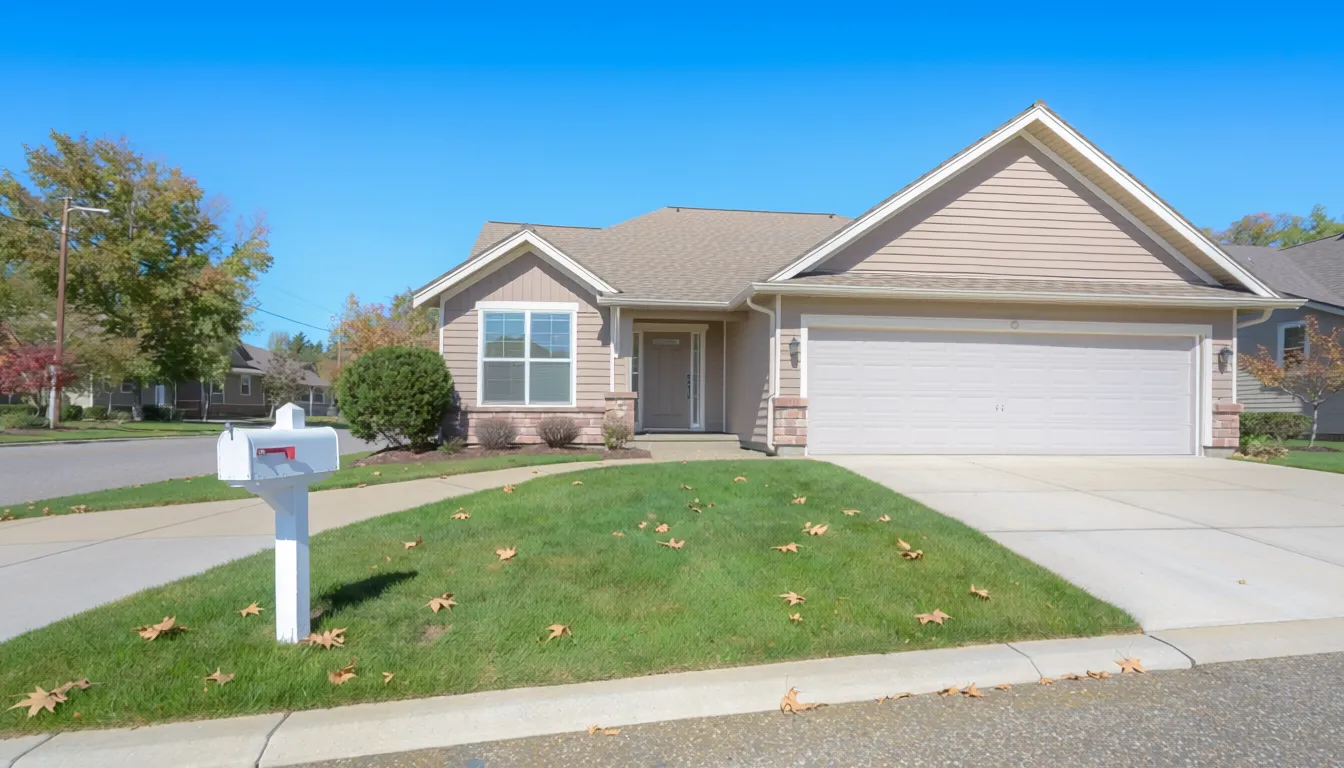
Less than two months of housing supply across the far northwest suburbs of Chicago would normally suggest a seller’s market across the board. But the inventory shortage is masking a sharp divide: roughly a quarter of listings are absorbing nearly all buyer energy, while the rest accumulate days on market and price cuts. That split, between updated, move-in ready homes and everything else, is shaping pricing, negotiation leverage, and investment strategy across McHenry, Kane, DeKalb, and Winnebago counties, according to Larry Naselli, a residential agent with Baird & Warner in Crystal Lake, Illinois.
Two Tracks, One Market
Prices across the far northwest suburbs are still rising year over year, anywhere from 2 to 8 percent depending on the municipality. Multiple offers remain common and days on market stay low, but only for a specific slice of available homes.
Naselli estimates that about 80 percent or more of millennial-age buyers skip past the roughly 75 percent of listings that lack updates or move-in appeal, competing instead for the 25 percent that show well and are priced in the market. The remaining listings – homes in mediocre condition or with deferred maintenance – are piling up days on market, taking price decreases, and giving buyers negotiating leverage. They still sell, given how little inventory exists, but the outcomes disappoint sellers who expected bidding wars.
The disconnect traces to seller expectations. Many assume that low inventory alone guarantees competitive offers. “You can certainly sell a house like that, but you won’t get top dollar; you won’t sell it quickly like that,” Naselli says. “You will not get a price fight over a house like that in most cases.”
For sellers whose homes sit on the market while occupied, the stress compounds. Staying showing-ready for months is disruptive. Leaving a home vacant carries its own risks; Illinois recently expanded protections for squatters, making vacant properties a liability for owners.
Where Buyers Are Heading
Four municipalities are drawing the most buyer activity. Crystal Lake benefits from stable institutions, good schools, and proximity to transportation, a quality-of-life draw that, layered on top of low inventory, produces fast sales. McHenry, an older river town on the Fox, offers affordability paired with enough municipal infrastructure to attract families.
Elgin, with roughly 150,000 residents and direct access to Interstate 90, has seen prices rise substantially yet remains one of the more affordable options in the region. Rockford, further out in Winnebago County, has seen its median single-family sale price climb from around $115,000 in 2020 to the $190,000 range, still well below what comparable homes fetch in closer-in suburbs.
“If you put a home on the market in Crystal Lake that’s under $300,000, you got a total food fight going on there of buyers coming in,” Naselli says. In Rockford, that same price represents a higher-end listing, which means investors face a lower entry point with room for appreciation.
Investment Shifting Toward Short-Term and Midterm Rentals
Foreclosure inventory remains thin, and competition among professional investors for what little distressed property exists is intense. Naselli attributes the scarcity to the equity position most homeowners hold; about 40 percent carry no mortgage at all, he says, meaning financial trouble rarely forces a distressed sale. Owners who do run into difficulty can typically sell and walk away with equity rather than losing the property.
For investors looking at cash-flow properties, Naselli points to Elgin and McHenry as strong candidates: affordable acquisition costs paired with decent rental income. But he notes that many single-family rental investors have moved capital into tourism rentals or midterm arrangements like travel nursing housing. The shift is driven by risk management. Illinois tenant protections make it difficult and slow to remove a non-paying tenant, and the eviction moratorium the state imposed left lasting damage on small landlords whose previously reliable tenants stopped paying.
“A lot of those have moved their investment dollars into tourism rentals or midterm rentals in order to secure their asset from destruction and from non-payment,” Naselli says. With short-term guests, investors hold a credit card on file and face no lease complications if a guest fails to meet their obligations.
First-Time Buyers and the Family Bank
The average age of a first-time homebuyer has hit 40, a figure Naselli connects not just to affordability constraints but to broader delays in entering what he calls “fully adult life.” A state program launched in March, Illinois’s down payment assistance offering up to $15,000 for first-time buyers who put down 1 percent, is designed to address the cash gap. The assistance is repayable when the loan is liquidated.
But the more visible trend in his market is intergenerational cash purchases. Parents or grandparents draw on retirement savings to make their child a cash buyer, then act as the bank for three, five, or seven years until the buyer can refinance into conventional financing.
“They’re not really cash buyers,” Naselli says. “They are to the seller, but really parents or grandparents are acting as the bank.” In a competitive market where cash offers carry significant weight, this arrangement gives first-time buyers a structural advantage over peers relying solely on mortgage pre-approval. The cash also helps buyers cover appraisal shortfalls when bidding above list price, a common requirement in a market with persistent multiple-offer situations.
Rates Have Not Cooled Demand
Despite persistent attention to mortgage rates, Naselli says higher rates have not meaningfully reduced buyer demand in the far northwest suburbs. Buyers at the margin may see reduced purchasing power or lose pre-approval entirely, but overall demand continues to outstrip the small pool of available homes. “The higher interest rates have not seemed to stop buyer demand in this area,” he says. “There’s plenty of demand for the small number of houses that are available for sale.”
The implication for sellers is that demand is not the constraint; presentation is. In a market where buyers have enough purchasing power to compete aggressively, the homes that lose are not priced out of the market. They are simply outshone by the quarter of listings that arrive updated, well-staged, and ready to occupy.
About the Expert: Larry Naselli is a residential agent with Baird & Warner in Crystal Lake, Illinois, covering the far northwest suburbs of Chicago.
This article is based on information provided by the expert source cited above. It is intended for general informational purposes only and does not constitute legal, financial, or real estate advice. Readers should conduct their own research and consult qualified professionals before making any real estate or financial decisions.