Most relocation stories begin with a job offer. In Dallas, some begin with a college acceptance letter.
Across the U.S., the reasons people move are changing as the people moving get older. Repeat buyers, those trading one home for another, are now older than at any point since the National Association of Realtors began its annual survey. Many have built up years of equity and are buying later in life, often near or in retirement, when a commute no longer decides where they live. Their priorities have shifted with them: buyers now weigh neighborhood quality and closeness to friends and family above proximity to work, and being near loved ones is among the most common reasons repeat buyers give for moving.
In Dallas, that family pull sometimes runs through a university campus, according to Lisa Marie Perkins, a luxury agent with Christie’s International Real Estate who works across the Dallas-Fort Worth and Austin markets.
“I do get a lot of reloads for universities where grandparents want to be closer to their grandkids that are attending college,” she says.
Coastal Buyers Keep Arriving
Perkins says most of the out-of-state buyers she works with come from the coasts, with New York and California leading. “I have a ton of clients from California that are still coming by the boatloads,” she says.
Regional data reflects that pattern. Southern California and the New York area have been among the largest sources of new Dallas-Fort Worth residents in recent years, according to the Dallas Regional Chamber. However, that flow has slowed considerably since the pandemic years.
The buyers who do arrive often bring considerable resources. Research shows that households moving to Texas bring substantial income with them, while California and New York lose income as residents leave. Perkins sees that in local prices. “Dallas has gone up a lot,” she says, pointing to West Coast arrivals “who actually have the money, who can afford it.”
Following Grandchildren to Campus
For the grandparents Perkins describes, the decision to relocate is not about a career or a school district. It is about being close to family during the years a grandchild is in college.
That sets these moves apart from the job-driven relocations that usually dominate the conversation about who is coming to Dallas. The reason for the move is a family milestone, and the timing follows the academic calendar rather than a hiring cycle.
These buyers are part of a broader national pattern. Surveys of older Americans show a growing share of grandparents relocating, sometimes across the country, to live near their grandchildren, a trend the housing industry has dubbed “baby chasing.” Most of these moves center on young grandchildren, when grandparents can help with child care and everyday family life. The college-age version is shorter and more defined, and it carries a familiar risk.
Advisers note that grandchildren grow up and their schedules fill, and that adult children may relocate again for work, leaving grandparents in an unfamiliar city. A grandchild who graduates and takes a job elsewhere raises the same question.
A Growing Campus Draw
Southern Methodist University, in the heart of the Park Cities, has given families more reasons to look at Dallas. The private university has seen record demand since joining the Atlantic Coast Conference, and its recent first-year classes have been the largest in its history. Those students arrive from across the country and around the world, giving the campus a broad national reach.
With most new students coming from outside Texas, many families are making housing decisions from a distance, and some decide to buy rather than rent.
Condos Timed to Graduation
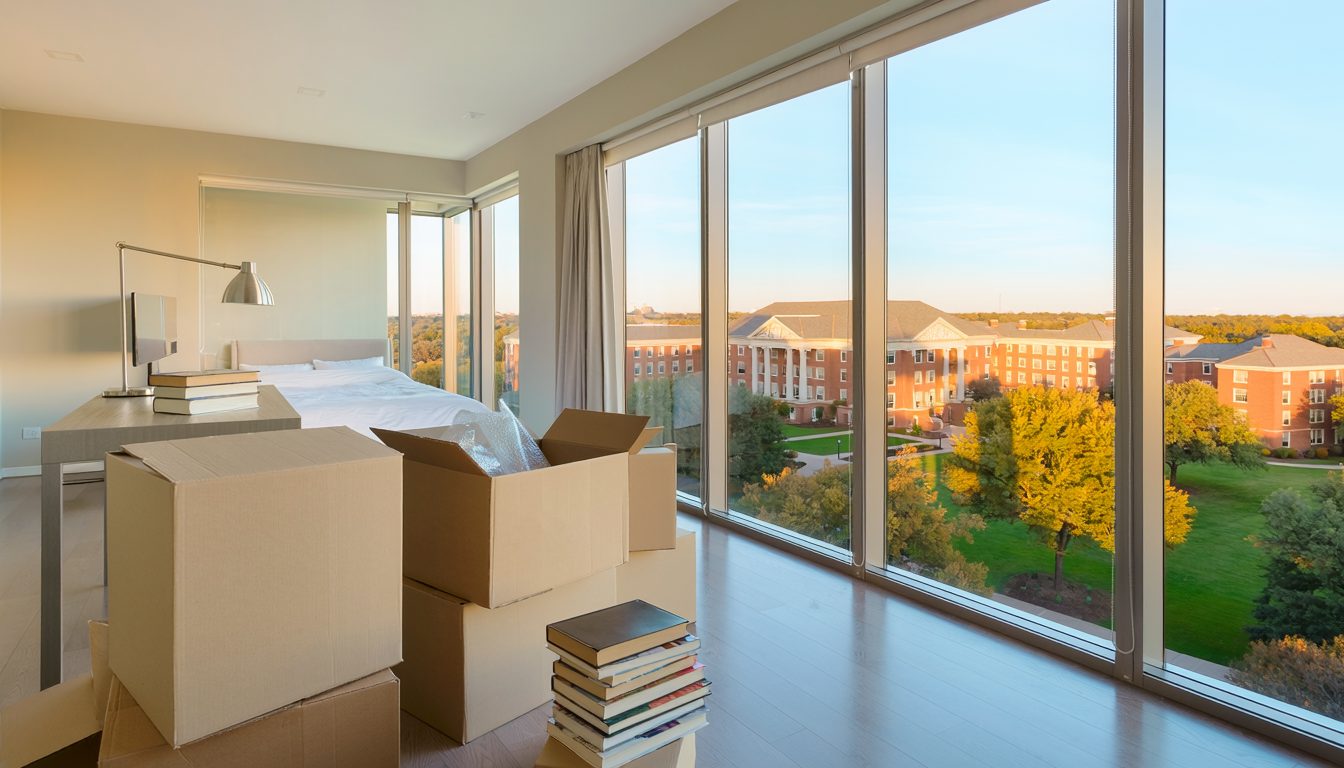
Parents are making a related calculation. In a luxury high-rise across from SMU, Perkins says, families often buy units for their children to live in while they attend school. “You get a lot of parents that need apartments for their daughters or their sons,” she says.
The pattern has a built-in timeline. Families hold the unit for the length of their child’s studies, then sell once the student graduates. Rather than a long-term home, the condo serves one chapter of a family’s life, with the exit planned from the start.
The practice is common enough in college towns to have its own nickname. Some agents call it buying a “kiddie condo,” a name taken from an FHA loan that lets parents help their children buy a home even if the parents won’t live there. In other college markets, agents describe parents planning to sell three or four years after buying.
Planning the Exit Early
That plan depends on finding the next buyer, and not every unit is equally easy to pass on. Smaller units in the building tend to be the hardest to resell. “The one-bedrooms, those are harder on people to wrap their head around,” Perkins says.
For families buying with graduation in mind, the choice of unit is effectively a choice about how easy the exit will be. A unit that suits one student well may face a narrower pool of buyers when the time comes to sell.
Building rules matter too. Condo financing may not be available in some developments depending on the number of renters, and buildings near campuses often have many student tenants. Condo and homeowners associations also usually set rules for rentals, which matters for families who hope to lease a unit out after graduation rather than sell.
A Softer Condo Market
The timing of that exit has become more consequential. Condo listings in Dallas County have climbed over the past year, and units are taking longer to sell, often at softer prices, which gives buyers more room to negotiate.
Perkins says longer selling times mean agents need to educate clients and find creative options. For a family that bought expecting a quick sale after graduation, conditions when they sell can matter as much as conditions when they bought.
Offering Units to Neighbors
When a unit in the building comes up for sale, the first people to hear about it are sometimes the residents themselves. Perkins, who has sold about seven units in the building and once lived there, says she contacts residents before a unit goes to the public market and gives them the first right of refusal.
After signing a recent listing, she sent a mass email to residents and booked two showings within two days. If no resident buys, she says, the unit typically goes to the open market within about 30 days.
In a building shaped by families cycling through the college years, that means the next owner may already know the hallways, the neighbors and the campus across the street.
In each of these cases, the purchase is one piece of a larger family story: a grandchild’s education, a parent’s wish to give a student a stable place to live, a grandparent’s choice to be nearby. The property matters, but the reason for buying it starts somewhere else.
About The Expert: Lisa Marie Perkins is a luxury real estate agent with Christie’s International Real Estate, covering the Dallas-Fort Worth and Austin markets.
This article is based on information provided by the expert source cited above. It is intended for general informational purposes only and does not constitute legal, financial, or real estate advice. Readers should conduct their own research and consult qualified professionals before making any real estate or financial decisions.