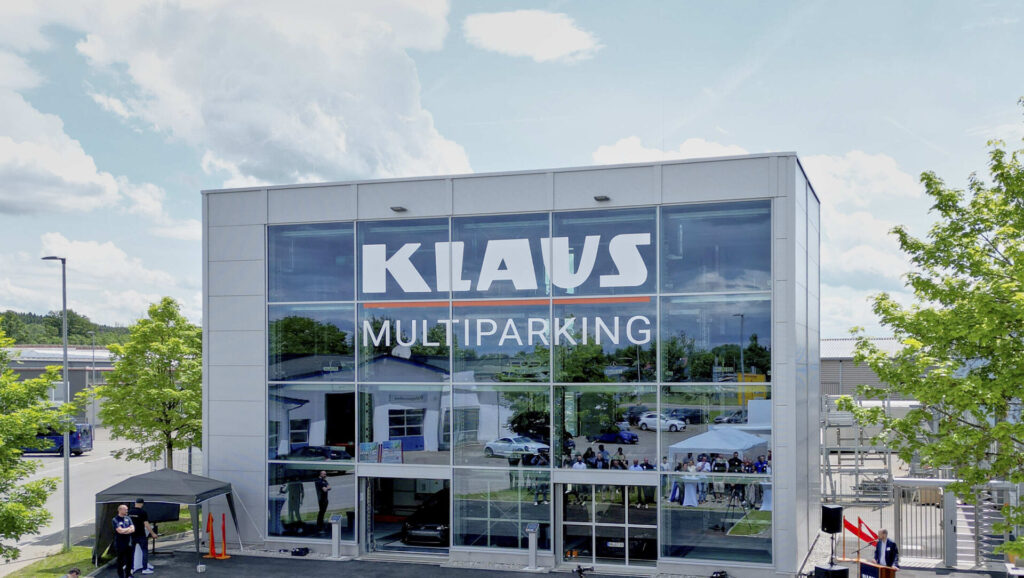
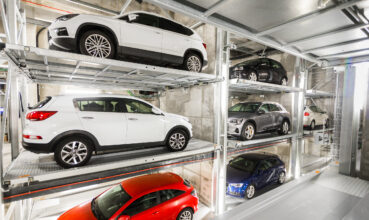
In a move that could reshape how real estate developers think about vehicle storage, KLAUS Multiparking unveiled its new kVario semi-automatic puzzle parking system during a launch event at its global headquarters in Aitrach, Germany. The event drew architects, engineers, and real estate leaders from around the world for an up-close look at the system, which aims to address the growing challenges of space, density, and sustainability in urban development.
The kVario is designed to offer flexible, modular parking configurations suited to high-density environments and space-constrained projects, from urban infill lots to high-end mixed-use towers. The launch comes at a time when developers are facing increasing pressure to optimize square footage while aligning with sustainability goals and evolving transportation trends.
Adapting to Urban Density and ESG Demands
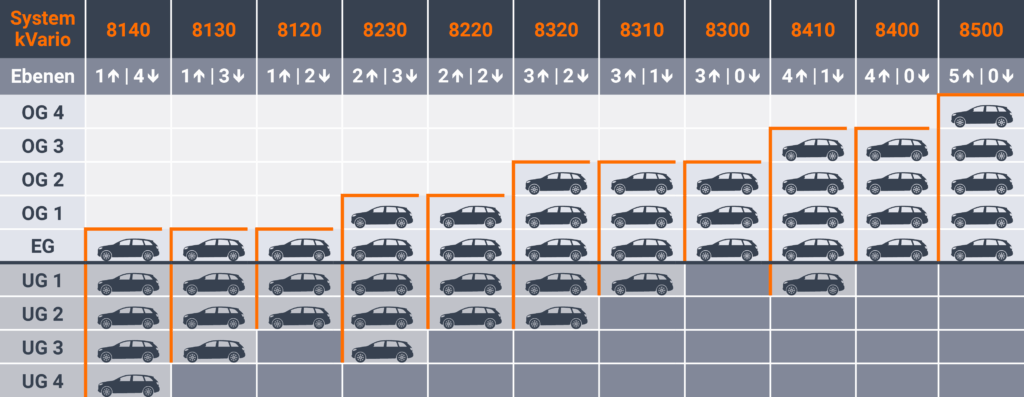
KLAUS officials described the new system as a response to the realities of modern development, where land is scarce, vehicle sizes are increasing, and cities are pushing for reduced emissions and better land use. Unlike traditional parking garages that require wide ramps and drive aisles, puzzle systems like kVario use stacked platforms to store vehicles vertically and horizontally within a compact footprint.
The system can be configured with or without a pit, allowing it to adapt to both new construction and retrofits. It’s also designed to accommodate a wide range of vehicle sizes, a growing concern for developers balancing electric vehicles, SUVs, and micro-mobility options.
“We’re seeing real estate teams across the U.S. look for smarter, more flexible parking strategies that fit within tight sites and changing code requirements,” said Christopher Tiessen, President & CEO of KLAUS Multiparking America, during the event. “kVario is our answer to that demand, a system that’s engineered to scale with both present and future transportation needs.”
A Strategic Focus on the U.S. Market
While the launch took place in Germany, KLAUS is emphasizing the system’s relevance for the North American market. Tiessen noted that kVario is now available for integration in U.S. projects, with the company offering full design consultation, installation, and post-implementation support through its New Jersey-based subsidiary.
The system is already being pitched to developers working on luxury residential towers, hospitality projects, transit-oriented developments, and adaptive reuse sites, segments where traditional parking layouts are increasingly being challenged by site constraints and economic pressures.
In markets like New York, Los Angeles, and Miami, where zoning incentives for automated or mechanical parking are gaining traction, systems like kVario could become an attractive alternative to large-scale underground, above ground, and combination garages.
Parking as Infrastructure, Not Afterthought
The launch event included a full-scale demonstration of kVario in operation, highlighting not just its space-saving design but its user experience. Attendees saw how vehicles are automatically stored and retrieved using a coordinated lift-and-slide mechanism, a setup that reduces the need for on-site staff while maintaining accessibility.
Industry observers say the system reflects a larger shift in how parking is viewed: not as an afterthought, but as a component of urban infrastructure that must evolve alongside energy codes, building technologies, and changing modes of transport.
“Parking is no longer just about stall count, it’s about how that space interacts with everything else in the building, from energy systems to rentable square footage,” said one consultant attending the launch.
Part of a Broader Engineering Legacy
KLAUS Multiparking, which has operated in the mechanical parking industry since the 1960s, is one of the oldest players in the sector. While the company has long offered stackers, semi-automatic and fully automated systems, kVario represents a next-generation evolution of puzzle-style parking: a category known for its ability to densify vehicle storage without requiring the complexity or capital expense of fully automated systems.
The German launch also spotlighted KLAUS’s emphasis on engineering precision and modular design: qualities that, according to executives, help developers manage construction timelines, reduce excavation, and minimize post-occupancy maintenance.
As developers in dense urban markets continue to balance real estate pressures with the need for mobility solutions, systems like kVario may find a growing foothold. Whether the U.S. market embraces the format at scale remains to be seen, but based on the international turnout in Aitrach, interest is clearly mounting.
Discover how KLAUS Multiparking America is simplifying smart parking design across the U.S.: https://us.multiparking.com
Disclosure: Individuals or companies mentioned may have a commercial relationship with KeyCrew.
This article was sourced from a live expert interview.
Every month we conduct hundreds of interviews with active market practitioners - thousands to date.
The luxury boutique hotel, opening fall 2026, uses mechanical parking to fold a full valet operation into limited mountain land. KETCHUM, Idaho — September 21, 2026 — KLAUS Multiparking America has brought mechanical parking to one of Sun Valley’s most anticipated hotel openings, completing the valet system at The Observatory, a Viceroy Resort, ahead of ...
When New York City’s City of Yes for Housing Opportunity eliminated parking mandates in December 2024, the policy applied to a defined zone: most of Manhattan below 96th Street, Long Island City, and parts of western Queens and Brooklyn. Outside that zone, across the rest of the five boroughs — the calculus facing developers didn’t ...
Off-campus student housing is one of the most parking-hungry residential categories being built today, and one of the least forgiving of a bad parking plan. Zoning still often expects near-universal car ownership among student residents, while site sizes near college campuses are frequently the tightest a developer will ever work with. That tension played out ...
When a developer buys an existing building and changes its use, the parking requirement almost never stays where it started. Municipal codes typically ask more of a residential conversion than they did of the office or retail use it’s replacing, and the developer is left holding a structure that was sized for a different set ...
Firm with a newly opened downtown Orlando office points to flat prices and building inventory as a repricing, not a collapse, heading into the late fall buying window ORLANDO, Fla. (Oct. 1, 2026) Dissonant Capital LLC, a vertically integrated real estate investment platform that recently opened an office in downtown Orlando, said today that the ...
As Vail Resorts reports a 12% drop in pass units and faces an activist proxy contest, the Kaufman & Company founder says whoever runs the mountains next has to solve for the people who work them LOS ANGELES (Oct., 2026) Daniel Kaufman, founder of the permanent capital holding company Kaufman & Company and an investor ...