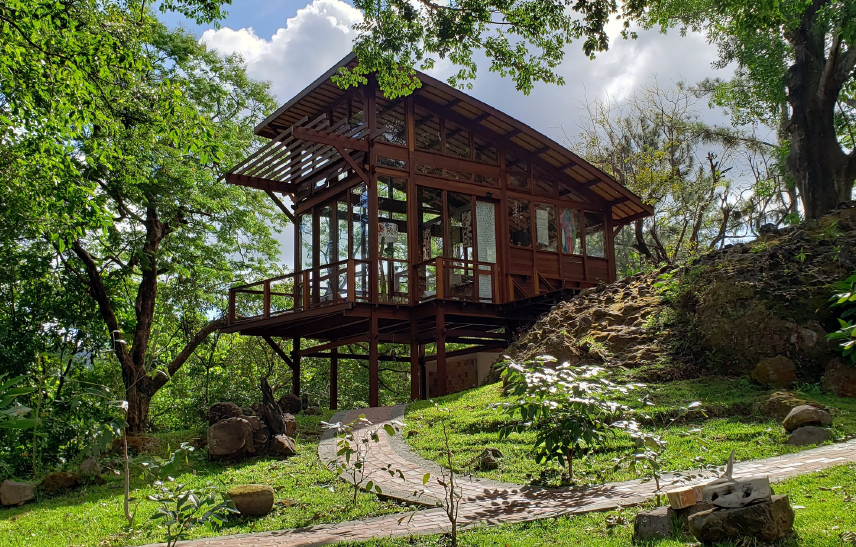
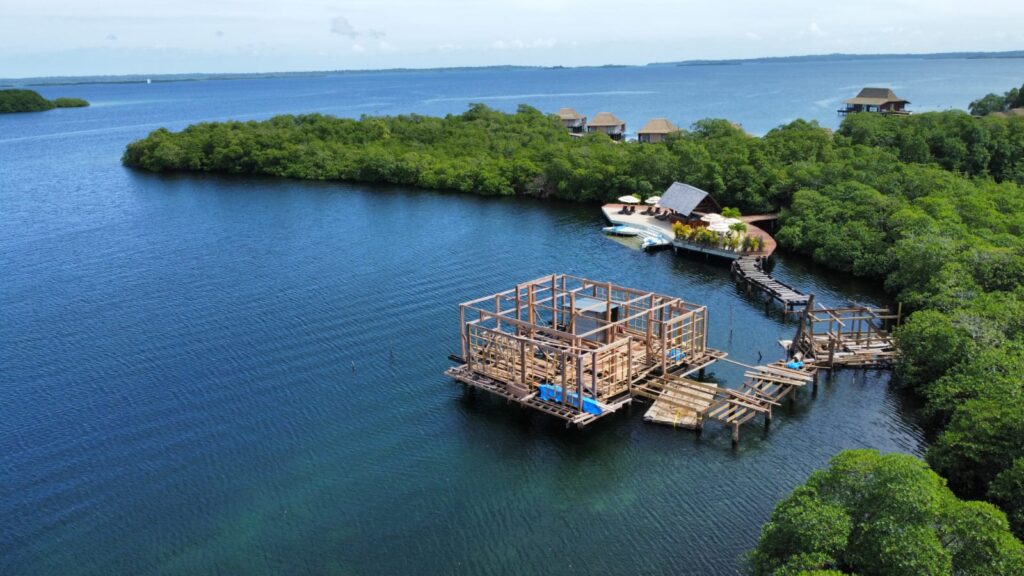
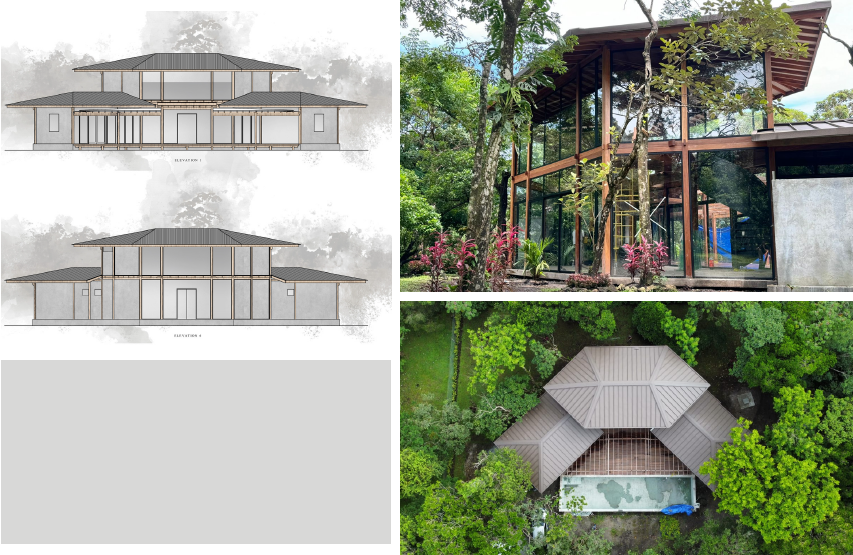
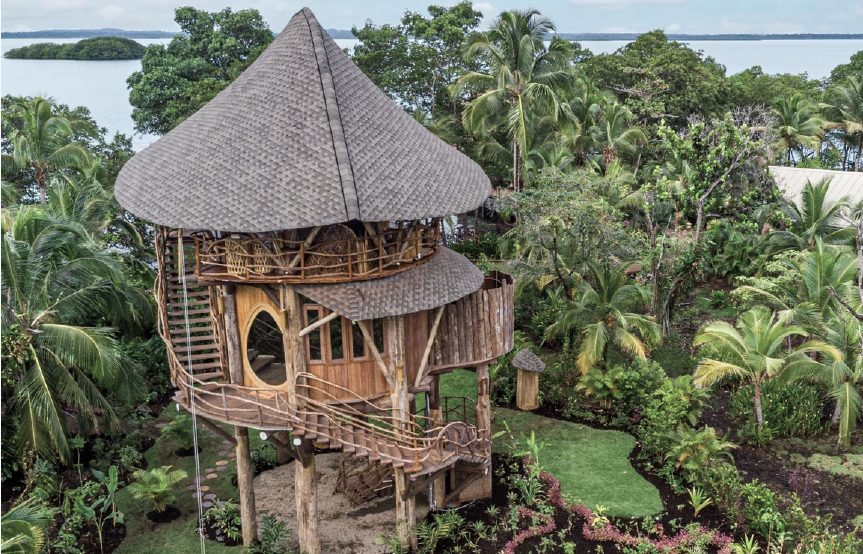
In an era when environmental consciousness often feels like a marketing exercise, Rodney Mendez and Summer House are proving that authentic ecological development can command a premium in the luxury market. Their portfolio, spanning from overwater villas in Panama’s mangroves to mountaintop retreats in Costa Rica, demonstrates how innovative construction methods can harmonize with nature while creating exceptional value.
The journey to this innovative approach began with an unexpected pivot. After founding a successful plastics manufacturing venture, Mendez recognized an opportunity in eco-conscious development. His transition led to a fundamental rethinking of construction in sensitive environments. “An island is a very pristine, very delicate environment,” Mendez explains. “I like to build in a way that, over a very long time, whatever you build is going to turn back into nature without having an impact.” This philosophy now underpins every aspect of Summer House’s development model.
While conventional coastal developers often grapple with environmental regulations, Summer House has engineered solutions that sidestep these challenges entirely. Their material selection focuses on naturally durable resources like Greenheart wood from Guyana, which offers century-long durability in marine environments without chemical treatments. This choice not only satisfies environmental requirements but eliminates significant maintenance costs. Similarly, their innovative use of reclaimed hardwoods from Panamanian lake beds creates premium finishes while avoiding traditional supply chain constraints and their associated costs.
The construction methodology further distinguishes their approach. Through a system combining mainland prefabrication with specialized marine assembly techniques, Summer House has reduced both environmental impact and development timelines. Their floating platform system enables foundation work in waters up to 18 feet deep without extensive permits or site preparation, transforming previously unbuildable locations into viable luxury properties while significantly reducing typical marine construction risks.
“Everybody wants to sell you sustainability and green projects,” Mendez observes, “but most of those projects are basically the same with some more greenery. Truly sustainable construction has to come from the basics.” This commitment to authentic sustainability has attracted a distinctive clientele. Within the ultra-luxury market, Summer House operates through a carefully cultivated network of specialized architects and builders—what Mendez calls a “tribe”—growing primarily through reputation and word-of-mouth referrals.
Their market position has proven particularly appealing to technology executives, entrepreneurs, and location-independent professionals seeking to combine luxury with environmental consciousness. These clients, often younger tech industry professionals who have achieved early success, value the ability to work remotely while embracing sustainable living. The developments integrate high-speed connectivity and modern amenities with their natural surroundings, creating environments that support both productivity and wellness.
The wellness aspect has emerged as a key market differentiator, with developments incorporating dedicated spaces for retreat activities and health-focused amenities. This focus addresses growing demand among luxury buyers for properties that support holistic lifestyle choices. Major hospitality brands have taken notice, seeing in Summer House’s model a path to differentiation in the competitive resort sector.
Summer House’s expansion across Panama, Costa Rica, and the Dominican Republic validates both their construction approach and market strategy. Their projects consistently achieve premium pricing while maintaining lower capital requirements than traditional luxury developments. The reduced permitting complexity, streamlined construction methods, and innovative material selection contribute to favorable development economics.
For developers and investors, Summer House’s model represents more than an alternative approach—it offers a blueprint for accessing an expanding market segment while reducing traditional development risks and costs. Their success demonstrates how authentic ecological development can create compelling returns while preserving the natural environments that make these locations extraordinary.
This article was sourced from a live expert interview.
Every month we conduct hundreds of interviews with active market practitioners - thousands to date.
Plainfield, Illinois, about 40 minutes southwest of Chicago, spent the last two decades building itself into a family-oriented suburb with good schools, highway access, and prices well below neighboring Naperville. That growth phase worked. Families moved in, raised children, and put down roots. Now many of those original homeowners are entering retirement, and their homes ...
In a city with enough inventory to give buyers real leverage, the segment of the Houston housing market that should be busiest, homes priced between $300,000 and $600,000, is among the slowest to move. Properties below $300,000 are attracting first-time and value-oriented buyers, and listings above $500,000 continue to draw move-up purchasers with less rate ...
Most small mountain towns in the American West have a straightforward real estate story: pandemic-era demand inflated prices, and now those prices are correcting. Taos County, New Mexico, is not following that pattern. Per-square-foot prices there are still climbing, according to Karen Todd, a real estate professional with The Dragonfly Group at Berkshire Hathaway HomeServices ...
A declining median price usually signals a cooling market. In Northeast Dallas, the story is more complicated. The number of homes selling in 2026 has actually increased compared to 2024 and 2025, according to Cindy Dunnican of The Dunnican Team at Coldwell Banker Apex, who has worked the Northeast Dallas market since 1998. But the ...
Large builders in Delaware call their homes “affordable” when prices start at $300,000 to $350,000. For workers earning 40 to 80 percent of the area median income, roughly $35,000 to $60,000 a year in Delaware, those numbers don’t work, even with down payment assistance attached. The gap between what programs label affordable and what service-industry ...
Homeowners who bought during the 2022–2023 building boom in parts of southern Dallas-Fort Worth are discovering an uncomfortable reality: the new homes going up next door are priced at or below what they paid. For sellers who need to exit, the math often doesn’t work. Some are coming to the table with cash beyond their ...