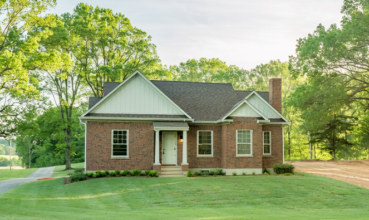
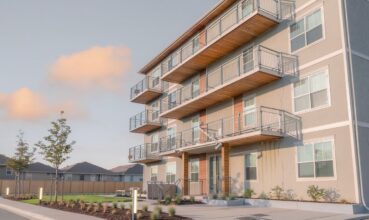
“Smart consumer devices remain accessible to tech-savvy Gen Z or young millennial homeowners who can purchase components from Amazon and configure DIY smart home solutions. However, I truly believe that individuals, when transitioning from renting to buying their first home, will prefer integrated systems that require minimal personal setup,” says Dan Ross, the newly appointed business strategy leader at Brilliant, a smart home technology company committed to creating intelligent, integrated home experiences.
The Evolution of Smart Home Technology
The smart home market has developed significantly since its inception. What started as a luxury for the ultra-wealthy has gradually become more accessible to average homeowners. However, a disconnect persists between consumer expectations and reality. While many homeowners have experimented with individual smart devices like voice assistants, connected light bulbs, and video doorbells, these piecemeal solutions often fail to deliver the seamless, integrated experience that consumers ultimately desire.
Ross, whose career spans nearly two decades in the smart home industry, has witnessed this progression firsthand. Beginning his career selling home theater systems at Best Buy in the early 2000s before moving to luxury home automation company Savant Systems, Ross brings substantial industry experience to Brilliant. After 15 years at Savant, including work in their energy automation division, Ross has recently joined Brilliant to lead their strategic vision.
The Challenge with DIY Smart Home Solutions
The DIY approach to smart home technology has clear limitations. As Ross points out, even tech-savvy homeowners often struggle with maintaining their assembled systems: “The light disconnects, and then it just stays disconnected for three months, as you prioritize other responsibilities.”
This pain point represents a significant market opportunity for Brilliant. Rather than positioning their solution as purely DIY or requiring expensive professional programming like traditional luxury systems, Brilliant is targeting what Ross calls the “do it for me” segment.
“How beneficial would it be to text your installer about a malfunctioning light, and they remotely access the system to resolve the issue immediately,” Ross explains, highlighting the value proposition of professional support without traditionally high costs.
Addressing Historical Smart Home Frustrations
Many consumers, particularly those from older generations who experienced the first wave of home automation, carry negative associations with integrated smart homes. Ross acknowledges these concerns are legitimate:
“When speaking with boomer generation homeowners, they frequently tell me, ‘Dan, I’ve lived with these systems, and I dislike them all.’ They appreciated the functionality, but the updates, changes, and components going offline due to software updates or network changes created negative user experiences.”
The problem, Ross explains, wasn’t just the initial cost but the ongoing maintenance: “The additional costs associated with home automation systems include yearly service, programming updates, software updates, and occasional hardware replacements. The professional installation network failed to effectively communicate these requirements to consumers.”
Brilliant’s Market Positioning
Brilliant is deliberately positioning itself as a middle-ground solution, offering comprehensive integration without the complexity or expense of traditional systems. As Ross describes it, their head trainer has a compelling message: “We deliver 90% of complex solutions’ functionality at 10% of the cost.”
This value proposition is particularly relevant given current economic conditions. “Considering today’s market dynamics, consumers are becoming more conservative about investing in advanced home technology,” Ross notes. “We’ve created a pathway for them to reduce home automation platform costs by 90% without sacrificing essential features.”
Professional Installation as the Key Differentiator
While Brilliant was previously marketed as both a DIY and professionally installed solution, Ross has a clear vision for its future direction: “After installing it in my personal home, I believe it should function as a ‘do it for me’ solution, meaning a professional trade should handle installation, whether that’s a low voltage integrator, an electrician, or a security installer.”
The benefits of professional installation extend beyond proper setup. As Ross explains: “Professional installers dedicate their careers to this field. They employ teams of educated, certified professionals who stay current on education, participate in our webinars and tutorials, and remain informed about our latest integrations and development roadmap.”
This expertise directly benefits customers: “They ensure the system functions optimally and provides an excellent user experience, while helping customers maximize the system’s capabilities rather than utilizing only partial functionality.”
Technical Advantages in the Professional Channel
One of Brilliant’s key technical differentiators is its approach to system customization. Unlike traditional high-end systems, Brilliant doesn’t require custom coding or specialized training:
“A significant Brilliant advantage is that no custom programming is required. These professionals don’t need specialized IT training or specific equipment purchases. They can install and program these systems directly from an application on their phone.”
This simplified approach makes Brilliant accessible to a broader range of installation professionals while still delivering a robust, integrated experience for the end user.
Target Markets and Growth Strategy
Brilliant is strategically targeting multiple market segments, with particular focus on two key areas. First is the mid-market residential segment, spanning from production-built homes starting around $400,000 up to custom homes in the $5 million range.
For production builders, Brilliant offers a competitive advantage: “Production builders seek to differentiate their communities from neighboring developments, and integrated smart home offerings provide this distinction. Brilliant’s affordable entry point makes it an attractive value-add for production builders.”
The second major focus is the multi-family sector, where Brilliant’s software platform provides significant advantages for property management: “Our primary differentiator in multifamily housing is our software platform, a property management system that integrates with major players like Smart Rent or Stratus while offering enhanced features beyond traditional options.”
This platform, called Brilliant Command Center, streamlines tenant transitions: “It enables property managers to facilitate resident move-ins and move-outs, disconnecting them from smart technologies in the unit, including thermostats, door locks, and leak sensors.”
Looking Forward
Ross is focused on growth as he shapes Brilliant’s future direction: “I enjoy working with focused startups positioned for rapid expansion, which aligns with our trajectory.”
His experience in the professional installation channel is already yielding results: “The professional installation channel presents significant opportunity for adoption. I’m quickly assembling nationwide sales teams to address this market.”
Early results look promising: “Our dealer acquisition rate has begun to increase after just two months. I anticipate substantial growth in the number of customers supporting, marketing, and selling our product, directly impacting revenue.”
For real estate professionals, developers, and homebuilders seeking to differentiate their offerings in a competitive market, Brilliant’s approach to smart home technology presents a compelling solution: comprehensive integration, professional support, and substantially lower costs than traditional systems. By bridging the gap between DIY limitations and high-end complexity, Brilliant is establishing a new standard for smart home implementation.
This article was sourced from a live expert interview.
Every month we conduct hundreds of interviews with active market practitioners - thousands to date.
Buyers looking in the small towns north of Greensboro, North Carolina – Summerfield, Oak Ridge, and Stokesdale – find highly regarded schools and lower tax bills, but few homes at moderate prices. Homes in Summerfield average about $625,000, and new construction averages closer to $850,000. “Summerfield can always use homes that are not as expensive ...
The American habit of trading up has stalled. For decades, owners moved to bigger homes as their families and paychecks grew; now millions are holding on to something the market no longer sells: a mortgage rate below 4%. Nearly half of all outstanding U.S. mortgages carried one in the second quarter of 2026, while a ...
For most of the past decade, insurance has been one of the fastest-rising costs of operating affordable housing. Across one Gulf Coast portfolio of tax credit properties, per-unit premiums more than doubled between 2017 and 2023, and New York owners saw the same doubling over an even shorter span. The increases hit properties that run ...
The math on buying a conventional short-term rental property has gotten worse from both directions. Mortgage rates sit well above their 2021 lows, making it far more expensive to finance a property. Rental revenue, meanwhile, has grown only modestly, and mostly because hosts are charging more per night rather than filling more nights. For individual ...
Small homebuilders in the Raleigh metro area are losing ground at the bottom of the market, and the reason is cost, not demand. Large national homebuilders have a cost advantage that no small operator can match: the purchasing power that comes with building hundreds or thousands of homes a year. For a 15-home-a-year operation competing ...
Across the U.S., empty-nest baby boomers own a far larger share of family-sized homes than millennials raising children, even though millennials are now the country’s largest generation of parents. Much of that comes down to money: many boomers have paid off their mortgages or locked in low rates years ago, so selling would mean trading ...