Small investors eyeing Orange County often default to the most familiar playbook: buy a single-family home, rent it out, build equity over time. But at Orange County’s current entry-level prices – $1.5 million to $2 million for a starter-to-mid-range home, according to Kathy Thomson, a residential agent with eXp Realty who has worked across Orange County and the Inland Empire for 18 years – that math does not hold. Investors who want positive cash flow need to think in terms of units, not houses.
Thomson says it plainly: “It’s hard to find a single-family home that’s going to cover your mortgage or your investment output” at current prices. For investors who want a property that carries itself, she steers the conversation toward multi-unit residential properties instead.
The Single-Family Math Problem
At a purchase price of $1.5 million or more, the combined monthly mortgage payment, property taxes, insurance, and maintenance on a single-family home will almost certainly exceed what a single tenant’s rent can cover. Thomson describes the current Orange County market as having under three months of supply, which keeps purchase prices high. Rents, though strong by national standards, have not kept pace with the cost of ownership.
The result is a gap that most small investors cannot bridge without subsidizing the property out of pocket every month. For a buyer whose goal is cash flow rather than pure appreciation, that monthly shortfall turns the investment into a liability until either rents rise significantly or the mortgage is paid down over years.
Where Units Change the Equation
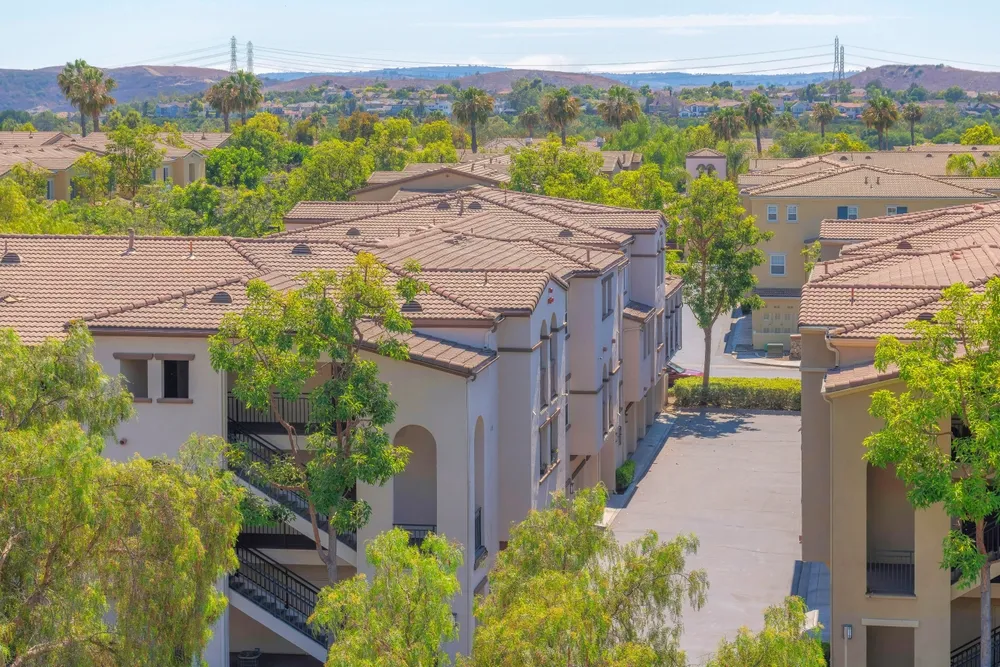
Thomson’s advice to investors considering Orange County is to look at residential properties with multiple units – in the range of two to four, or even five to eight. The logic is straightforward: multiple rent checks against a single mortgage and property tax bill. Thomson says that with units, investors “can sometimes get that to cover all of your costs” – and beyond covering costs, they stand to benefit from equity growth and tax advantages over time.
Multi-unit properties are harder to find in a built-out market like Orange County, where most of the housing stock is single-family. But Thomson suggests that investors willing to look beyond the most competitive submarkets may find better opportunities. She points to areas in the Inland Empire, where prices are lower, as a contrast to tighter Huntington Beach and central Orange County neighborhoods. “You can find some deals if you go outside of those busier markets,” she says.
The Tradeoffs Are Real
Managing multiple tenants is more complex than managing one. Vacancy in one unit of a fourplex shifts the math quickly. And multi-unit properties in desirable Southern California locations often carry their own premium, narrowing the cash-flow advantage that makes them attractive in the first place.
Thomson also notes that the broader buyer mood in Orange County right now leans cautious. She describes buyers as hesitant about large purchases, which could affect resale liquidity for investors who need to exit. An investor who buys a multi-unit property in a softening market may find fewer buyers when it is time to sell.
What Is Actually Selling – and What Is Not
The cash-flow question exists alongside a broader pattern in Orange County: condition and pricing discipline determine which properties move and which sit.
Thomson says homes in the $1.5 million to $2 million range are selling most consistently, provided they are updated to current standards. She points to a specific example: in one neighborhood, two comparable listings diverged sharply. One had been renovated within the last month to match current design preferences – colors, finishes, layout. That home sold. The other, upgraded to a 2018 or 2020 aesthetic, was still sitting on the market.
Price reductions are appearing, but Thomson says they are concentrated among sellers who listed based on last year’s pricing rather than current conditions. “The market is a little bit less aggressive,” she says, and sellers who do not adjust early end up correcting later.
For investors, this pattern carries a direct implication: a property purchased as a rental must also be competitive if it ever needs to be sold. Dated finishes or above-market pricing will extend time on market – Thomson’s recent listing in Yucaipa took about 90 days to sell, and she notes the average in that area can run anywhere from 44 days up to 90, depending on pricing accuracy. In Huntington Beach, well-priced homes in good condition sell closer to 30 days.
The gap between those timelines illustrates the range of outcomes an investor faces depending on submarket, condition, and pricing discipline. Lower entry prices in areas like the Inland Empire come with longer hold times if the exit strategy depends on resale rather than long-term rental income.
For small investors whose primary goal is a property that pays for itself, single-family homes in Orange County face an arithmetic problem that appreciation alone does not resolve. Multi-unit properties offer a path to positive cash flow, but they require more active management and carry their own risks in a cautious market.
About the Expert: Kathy Thomson is a residential agent with eXp Realty who has worked across Orange County, California, and the Inland Empire for 18 years.
This article is intended for informational purposes only and does not constitute legal, financial, or investment advice. The views and opinions expressed herein reflect those of the individuals quoted and do not represent an endorsement of any company, product, or service mentioned. Readers should conduct their own due diligence and consult qualified professionals before making any investment decisions.