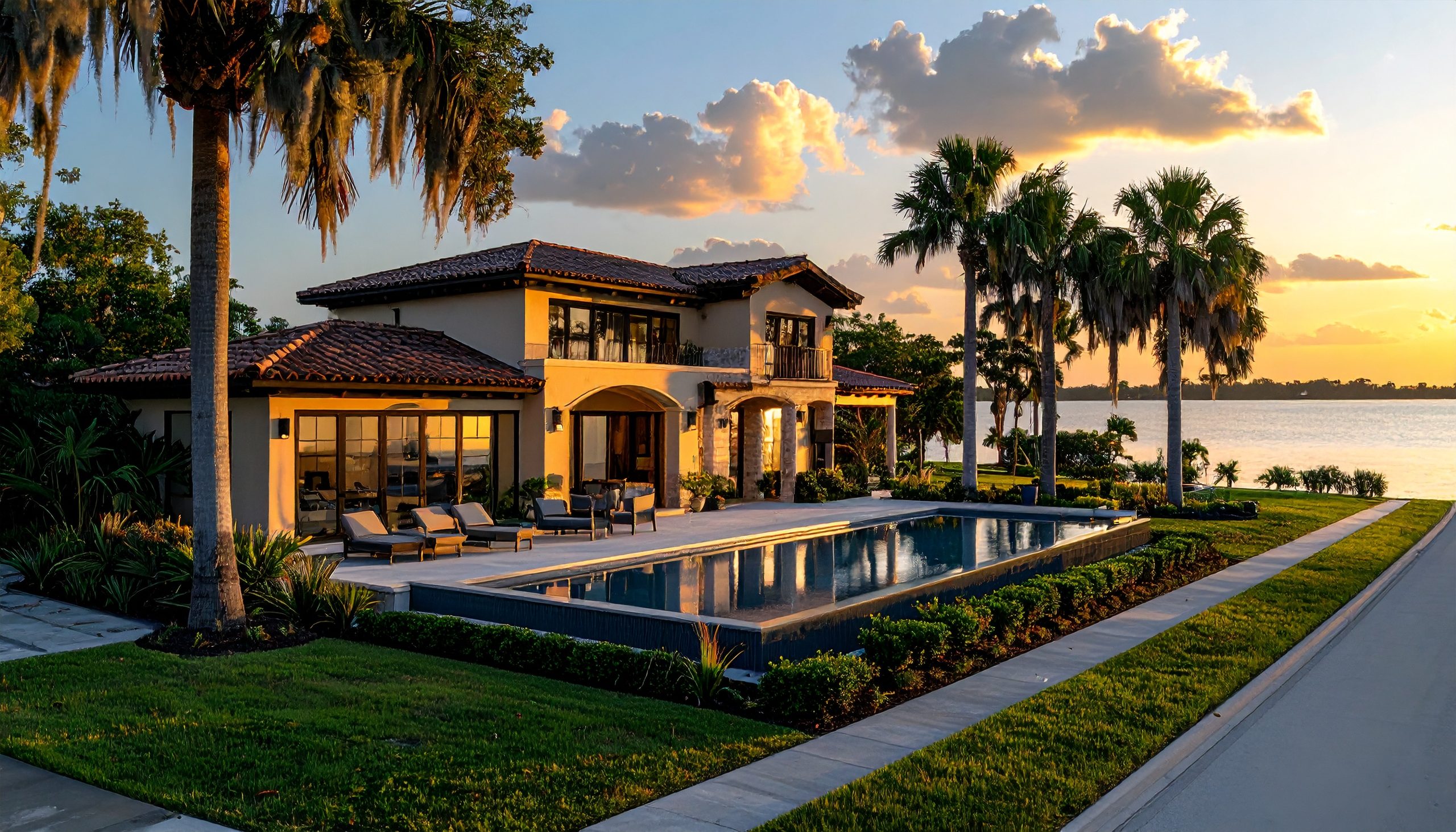
Central Florida’s luxury housing market is carrying more inventory than it did a year ago, but the added supply doesn’t signal a pullback in demand. At the top of the market, buyers remain active. Well-priced homes above $1.5 million are still moving quickly, sometimes before interested buyers can submit an offer. What is accumulating instead are listings priced too high or marketed without a clear audience, some of them sitting for more than 300 days.
That gap between homes that sell in weeks and homes that linger indefinitely is widening, according to Bent Danholm, Broker / Co-Owner of Danholm Collection, a Central Florida brokerage focused almost exclusively on transactions above $1.5 million. The firm’s average transaction currently sits around $1.8 million, and most of its buyers pay cash.
“If it’s priced right and it’s marketed properly, it will probably sell pretty quickly,” Danholm says. “But I also see homes that have been on the market for 316 days.”
Marketing to The Buyer
The brokerage’s approach to listings starts with identifying who the most likely buyer is for a specific property: their income, professional background, family size, geographic origin, and interests. Only after building that profile does the team decide which marketing assets to create and where to place them.
In one Winter Garden community, where homes averaged 120 days to contract, Danholm says the firm sold three of the five homes that changed hands over six months. All three went under contract faster than that average, pulling it down to 78 days.
“If you don’t know who to present these things to, your listings are going to sit for a very long time,” he says.
The pattern points to where the luxury segment’s added inventory is coming from. Homes with accurate pricing and targeted marketing are still selling well below community averages for days on market. Homes that lack either are the ones adding to inventory.
Overpriced Listings Stall
Danholm says the most persistent seller mistake, regardless of market conditions, is pricing high to leave negotiating room. In a market with growing inventory, that strategy backfires.
His advice is to price slightly under what the seller expects to get, because that creates urgency and competition among buyers. He adds that he won’t take a listing if the seller isn’t willing to price it realistically, because no amount of marketing spend can compensate for a price that drives buyers to wait rather than act.
“They’ll love it on Zillow and Realtor.com, and they’ll put the little heart mark on, and they’ll follow it, but they are not doing anything until you drop your price,” he says. “And then when you drop your price, they go in with a really aggressive offer, and you end up selling for a lot less than you could have in the first place.”
Cash Buyers Ignore Rates
Rate swings have dominated the broader housing conversation, but they have little bearing on Danholm’s segment because most of his buyers pay cash. Entry-level buyers depend on mortgages, so rates shape what they can afford and whether they qualify. A cash buyer pays the same price wherever rates land.
“A lot of people claim the market is terrible and it’s changed a lot, but I don’t think that’s the case,” he says. “Maybe if you’re selling two- or three-hundred-thousand-dollar homes, but not in this price range.”
The brokerage hasn’t had a deal fall apart in the past year. Danholm says his sellers are still willing to sell, his buyers are still willing to buy, and the firm’s pipeline has remained steady. For buyers and sellers at this level, the market over the past six to 12 months has been functionally unchanged.
International Buyers Stay Active
Brazilian buyers in particular have increased their presence in Central Florida’s luxury market over the past three to four months, according to Danholm. Brazilians are already among the largest groups of international buyers in Florida. Industry analysts point to currency protection as one driver: owning U.S. property lets Brazilian buyers hold wealth in dollars rather than in the more volatile real.
UK buyers have also remained active. These international purchasers tend to buy high-end vacation homes they use personally rather than properties intended for short-term rental income. They buy in communities such as Keene’s Pointe in Windermere, where they can use the home during visits and leave it vacant the rest of the year.
Watching the Wider Economy
The one variable Danholm is watching closely is the broader economic impact of geopolitical instability. While current luxury buyers remain unaffected, a prolonged conflict and a resulting recession could eventually reach even cash-heavy price tiers.
“Right now, it’s not really affecting the buyers and sellers I’m working with,” he says. “But if this thing continues and we go into recession, that’s what could be really worrying.”
Danholm says more clients now begin their search for an agent on AI platforms like ChatGPT, a process he describes as “a whole different ball game than Google searches.” For buyers and sellers, that means an AI tool’s recommendation reflects what it can find online about an agent, so it still pays to check reviews and recent sales directly.
For now, Danholm’s bet is that disciplined pricing and targeted marketing will continue to separate fast-moving listings from stagnant ones, regardless of what happens with rates, politics, or the broader economy.
About the Expert: Bent Danholm is the Broker / Co-Owner of Danholm Collection, a luxury-focused brokerage in Central Florida concentrating on residential properties above $1.5 million. He is also a host on American Dream TV.
This article is based on information provided by the expert source cited above. It is intended for general informational purposes only and does not constitute legal, financial, or real estate advice. Readers should conduct their own research and consult qualified professionals before making any real estate or financial decisions.