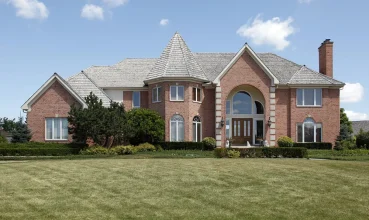
After a period of declining values that followed Austin’s pandemic-era price surge, prices in the city’s luxury segment appear to have stopped falling. For buyers who have been waiting for a better deal, that changes the calculus – but the political and economic uncertainty that suppressed demand in the first place has not fully resolved, according to Stephanie Nick, a luxury agent with Moreland Properties, a 40-year-old privately owned Austin brokerage.
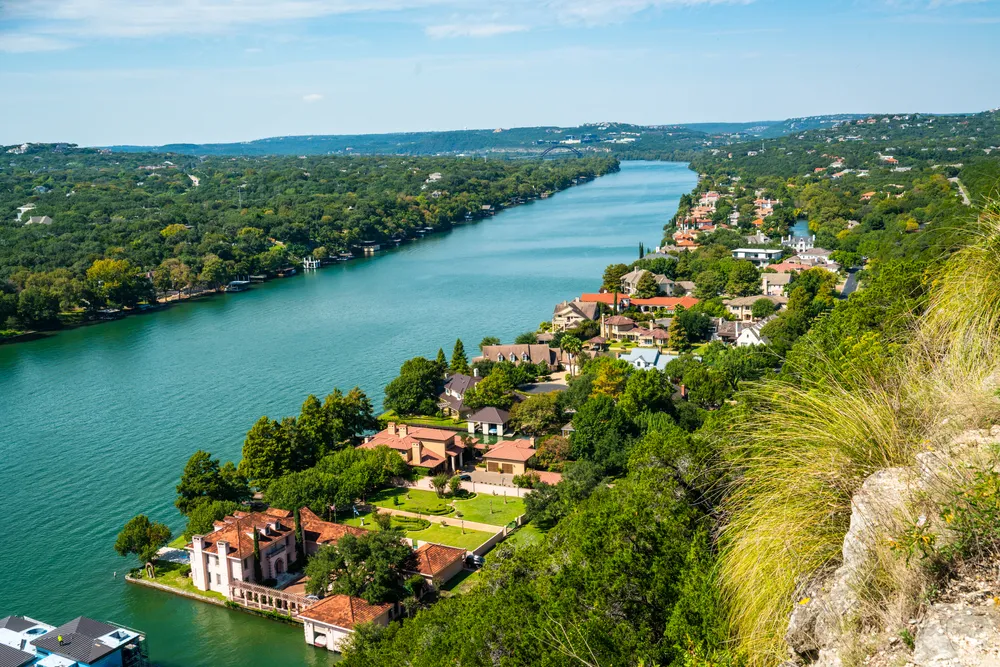
Nick has watched prices across Austin’s waterfront, golf course, and downtown luxury markets decline from their peaks, and she says the slide has stopped. “I think we’ve gone flat,” she said. She does not expect prices to fall further, particularly on Lake Austin, where supply is physically constrained. Land along the lake is finite, and new waterfront parcels essentially do not come to market. That scarcity, combined with continued demand from out-of-state buyers relocating from high-tax states like New York and California, creates a price floor Nick believes will hold.
Recent Sales Suggest Demand at the Top
Nick pointed to recent waterfront activity as evidence. Boat slips on Lake Austin – just the dock, not a house – have recently sold for $1.5 million apiece. Properties listed at $24.5 million and $29.5 million are circulating off-market. At the very top of the market, homes have traded in the $40-to-$50-million range.
Austin’s appeal to wealthy relocators reinforces that demand. Texas has no state income tax, and homestead exemptions cap property tax increases at 10 percent annually for primary residences. Buyers who establish residency – which requires being present for six months and one day – lock in those benefits. That combination continues to pull high-net-worth individuals from coastal metros.
Nick said the typical luxury buyer relocating to Austin comes from New York, California, Connecticut, or Seattle, drawn by a combination of tax advantages and lifestyle. “It’s so laid back,” she said. “You can still be very chic and not have to worry about someone thinking about who you are, what you wear, where you come from and how much you have.”
Why the Floor May Be Less Firm Than It Looks
The risk in declaring a bottom is that the forces suppressing demand have not fully resolved. Nick acknowledged that many luxury buyers are “cautious because of our political environment.” Stock market volatility and policy uncertainty are making wealthy individuals reluctant to deploy capital. When the buyer pool is tied to equity markets and business confidence, a sustained downturn in either could push prices lower regardless of how constrained supply is.
Seasonality complicates the picture further. Nick noted that summer is consistently slow in Austin. June, July, and August see reduced activity as wealthy buyers leave Texas for cooler locations. That makes price signals during those months harder to read – a quiet July does not necessarily mean the market is weakening, but it does not confirm a recovery either.
There is also a structural question the flattening does not address. Austin’s luxury prices rose sharply during the pandemic years, driven by remote-work migration. Even after the correction, prices remain well above pre-pandemic levels. A buyer purchasing now is not buying at 2019 prices – they are buying at a post-correction level that still reflects years of rapid appreciation. If the political headwinds Nick described intensify rather than fade, prices could have further to fall.
Where Activity Is Strongest – and Where It Isn’t
Nick described a split in the market by price tier. Properties above $5 million are moving relatively quickly. The $1.5-to-$3-million range, by contrast, is taking longer to sell. She attributed much of the high-end velocity to the type of buyer involved – people with significant cash who are purchasing second or third homes and are less sensitive to financing conditions.
Off-market sales play a large role at this level. Nick said many high-end properties never appear on the MLS. Some of the most expensive Lake Austin homes – including those priced above $20 million – circulate privately, in part because Texas is a non-disclosure state, meaning sale prices are not publicly recorded. For buyers, that means access to the full inventory requires working with agents embedded in these private networks.
Nick said she had back-to-back showings recently on a Westlake property listed at just under $8 million – one from a New York buyer, another from a venture capital fund. She expects buyer activity to increase within the next six to nine months. “I think it’s the calm before the storm,” she said.
For buyers considering Austin’s luxury segment, the evidence points in both directions at once. Supply constraints and continued in-migration from high-tax states support prices. But the same political uncertainty Nick identified as a drag on buyer confidence has not resolved, and summer seasonality makes near-term signals difficult to interpret.
About the Expert: Stephanie Nick is an agent with Moreland Properties in Austin, Texas, with 21 years of industry experience.
This article is intended for informational purposes only and does not constitute legal, financial, or investment advice. The views and opinions expressed herein reflect those of the individuals quoted and do not represent an endorsement of any company, product, or service mentioned. Readers should conduct their own due diligence and consult qualified professionals before making any investment decisions.