California needs roughly a million new homes a year. It is nowhere close. In the South Bay of Los Angeles – a pocket of LA County that includes Redondo Beach, Hermosa Beach, and El Segundo – the gap between what is needed and what is getting built may be widening. The obstacles are not just regulatory. They are financial, and according to David Coe, a residential agent and infill developer with the Coe Real Estate Group who has built small-lot subdivisions and mixed-use projects across the LA area through Capital Stack Investments, the math is getting worse. “There’s not a lot of good tailwinds for building in the city of Los Angeles,” Coe says.
The problem is not any single cost. It is that every cost is elevated at the same time.
Land, Labor, and Lending All at Once
Building new housing in the South Bay starts with finding land, and the area has almost no vacant parcels left. Infill development – tearing down older single-family homes or small commercial properties and building denser housing on the same lots – is the only realistic path. But land prices have stayed firm even as transaction volume has dropped, because homeowners with low mortgage rates have no pressure to sell.
Construction financing is expensive with rates in the mid-six-percent range. Labor costs have climbed sharply, driven in part by demand from fire-rebuilding efforts elsewhere in Los Angeles County. Coe says rebuilding “is pulling a lot of labor up into those areas,” raising wages across the region.
When those inputs combine – expensive land, expensive financing, expensive labor – and developers try to sell finished homes to buyers who are themselves constrained by high mortgage rates, “those deals don’t pencil a lot of the time,” Coe says. The cost to build exceeds what the market will pay, and the project never gets started.
Regulatory Relief Is Coming, but Slowly
California’s state government has been trying to ease some of the regulatory friction. Legislation has targeted CEQA (California Environmental Quality Act) requirements and the ability of local communities to stall projects. One law under consideration would require cities to disclose all project requirements upfront, rather than adding new demands months into construction.
Coe says those surprise requirements have blindsided his projects. A city might approve plans with one set of conditions, then return seven months later requiring a new streetlight or road improvement that carries real costs. The upfront-disclosure rule would at least let developers budget accurately from the start.
But regulatory reform alone does not solve the core financial problem. Even if permitting becomes faster and cheaper, the land-plus-labor-plus-lending equation still has to produce a home someone can afford to buy. In many cases right now, it does not.
What Density Actually Looks Like Here
The longer-term vision for LA involves building taller and denser near mass transit stops – 10- to 20-story buildings near subway stations, a gradual shift toward vertical density more common in other major cities.
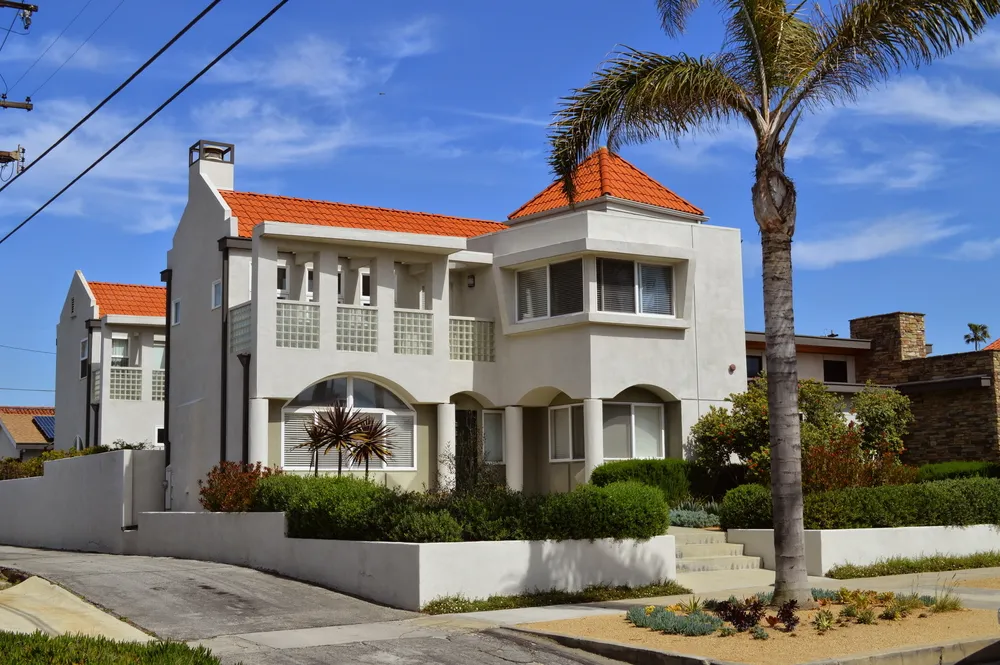
In the South Bay, that vision is limited. The area lacks the mass transit infrastructure that would trigger high-density development. What Coe and other infill developers have built instead are small-lot subdivisions – single-family homes on lots as small as 1,000 square feet, built six to eight inches apart, designed for first-time buyers who want to own rather than rent. One of his projects merged five adjacent lots into 27 individual homes, each around 2,000 square feet. Buyers get new construction and California’s 10-year warranty protections, but no yard to speak of.
These projects add housing units, but not at the scale the region needs. And even this type of development has slowed. Coe says raising capital for new construction has become harder because investors who might have funded new deals are focused on preserving existing investments. He estimates that somewhere between 60 and 70 percent of multifamily deals have required some form of capital call in recent years, draining dollars that might otherwise flow into new development.
A Bottleneck That Reinforces Itself
The region needs more housing to address affordability, but the conditions required to build it – cheaper land, lower rates, available labor, willing capital – are all moving in the wrong direction at the same time. Coe describes infill construction as “the only way we’re going to be able to build our way out of our affordability crisis.” For buyers waiting for new supply to bring prices down, the wait is likely to be long. Each cost pressure that discourages building also keeps existing inventory scarce, which keeps prices firm, which keeps land expensive – and the cycle continues.
About the Expert: David Coe leads Coe Real Estate Group in Redondo Beach, California, covering resale and new construction in the South Bay area. He also operates Capital Stack Investments, focused on infill development projects.
This article is intended for informational purposes only and does not constitute legal, financial, or investment advice. The views and opinions expressed herein reflect those of the individuals quoted and do not represent an endorsement of any company, product, or service mentioned. Readers should conduct their own due diligence and consult qualified professionals before making any investment decisions.