First-time buyers in Chicago’s south suburbs face a problem patience alone cannot solve: the homes they want cost more than they can afford at today’s interest rates. Rather than settle for a smaller house or wait for rates to drop, a growing number are buying small multi-unit properties and letting a tenant cover part of the mortgage, according to Jennifer Upshaw, owner and broker at L. Upshaw Realty, Inc., a family-owned brokerage in the area.
Upshaw works mostly with first-time buyers in the south suburbs and says the gap between what they qualify for and what they want has become one of the defining tensions in the current market.
When Buying Power Shrinks, Expectations Collide
Higher interest rates have compressed what buyers can borrow. A buyer who might have qualified for a certain amount two or three years ago now qualifies for less. “The buying power has significantly reduced for a lot of folks due to the interest rates,” Upshaw says.
That reduced buying power runs into a housing market where prices have not dropped to compensate. Inventory in the south suburbs remains tight, and what is available at the lower end often does not match what buyers picture when they imagine their first home. Upshaw sees the tension firsthand: “Their expectations of what they want versus what they’re able to buy is in conflict.”
The result is longer searches, more frustration, and in some cases, buyers who nearly walk away from the market entirely.
The Two-flat Workaround
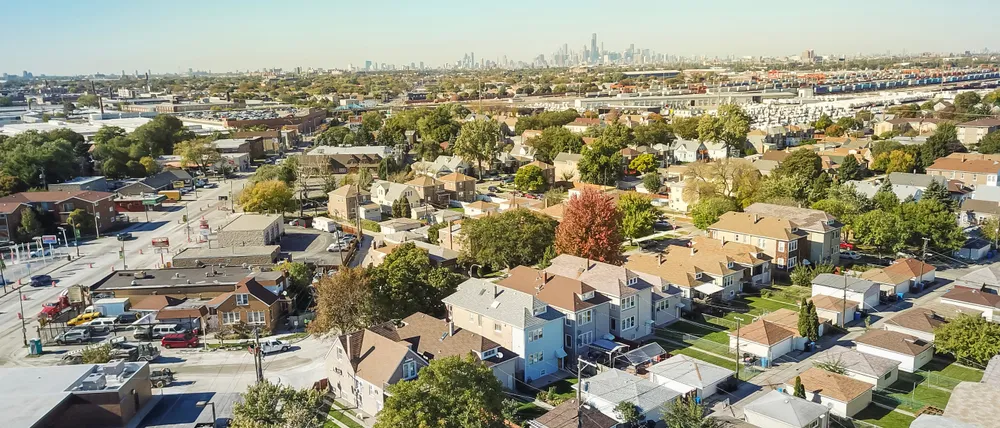
Instead of lowering their standards or stretching beyond their comfort zone, some buyers are rethinking the type of property they target. Upshaw says buyers are “transitioning away from single family homes and trying to buy two flat or three flat.”
A two-flat or three-flat lets the buyer live in one unit and rent out the others. That rental income offsets the mortgage payment, lowering the buyer’s true housing cost. Upshaw says her clients are drawn to the idea because “they want to live in one of the units, but they also want their tenants to pay their mortgage for them.”
For a first-time buyer, this can be the difference between affording a home and not. Rather than covering the full mortgage from a single paycheck, they share the cost with a renter. In a market where single-family homes at affordable prices are scarce, a two-flat in the same neighborhood might be more available and more financially workable.
What Makes the South Suburbs Attractive – and What Makes Them Difficult
The south suburbs draw buyers for specific reasons, according to Upshaw. School districts rank high on the list – Upshaw says Homewood-Flossmoor High School in particular pulls families into the area. Safety and police presence in communities like Homewood, Flossmoor, Olympia Fields, Matteson, Tinley Park, and Orland also factor into neighborhood decisions. Upshaw describes the area as diverse and says buyers looking for that feel find the south suburbs appealing.
The tradeoff is taxes. Property taxes in the south suburbs are high enough that Upshaw calls them the single biggest concern for buyers and investors alike. “The taxes are really concerning for everybody,” she says. “It’s making it very hard for even our investors to even want to stay in this area.” For buyers considering a two-flat, those taxes can erode the rental income advantage faster than expected.
Where Deals Fall Apart
Financing remains the most common reason transactions collapse in this market, according to Upshaw. She describes situations where a buyer’s credit score drops 40 or 50 points right before closing because of an unexpected credit event, or where gift funds that were promised never materialize. “It’s usually around money and finance,” she says.
Inspections, by contrast, have been less of a problem recently. Upshaw says she has been able to negotiate through inspection issues without losing deals – a point she considers a positive development in the current market.
What Investors Are Asking
Upshaw also works with investors, some of them out of state, who target the south suburbs for buy-and-hold or flip opportunities. She says the first step with any investor is determining their strategy – whether they want to flip, hold, or build a mixed portfolio of single-family and multi-unit properties – before directing them to specific areas. She connects investors with opportunities through wholesalers and tax lien and tax deed contacts, and says her local knowledge is a key factor for out-of-state clients who rely on her to assess conditions on the ground.
The Multi-unit Shift in Context
Single-family homes still dominate overall sales in the south suburbs, but Upshaw says the volume of first-time buyers asking about two-flats and three-flats has become a consistent part of her practice rather than an occasional outlier. The strategy reflects a practical response to a specific set of conditions: limited inventory, reduced buying power, and high carrying costs that make any tool for offsetting monthly payments worth considering.
Upshaw’s advice to all buyers remains the same: “Do not buy this if you don’t absolutely love it.”
About the Expert: Jennifer Upshaw owns and operates L. Upshaw Realty, Inc., a family-owned brokerage working across the south suburban Chicago corridor.
This article is intended for informational purposes only and does not constitute legal, financial, or investment advice. The views and opinions expressed herein reflect those of the individuals quoted and do not represent an endorsement of any company, product, or service mentioned. Readers should conduct their own due diligence and consult qualified professionals before making any investment decisions.